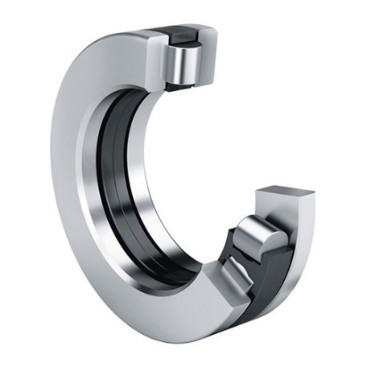
An axial cylindrical roller bearing is a heavy-duty thrust bearing that uses roller-shaped elements instead of balls to carry very high load along a shaft at low to moderate speed. It is built for presses, rolling mills, and heavy gearboxes where a ball thrust bearing would wear out too quickly.
Building a strong axial cylindrical roller bearing starts with the roller-to-washer fit, since these bearings are meant to survive years of heavy, repeated pressing force. Our workshop at Shree Balaji Export hardens and grinds each roller and washer set together as a matched unit, then runs a load check before the bearing is boxed for shipping. We supply these heavy thrust bearings to customers across Sri Lanka, South Africa, the UAE, Nigeria, Egypt, Indonesia, Thailand, and Kuwait, and our documentation team handles the export paperwork so your consignment clears customs without hold-ups. Browse our complete range and get a quote at Shree Balaji Export.
Product Specifications
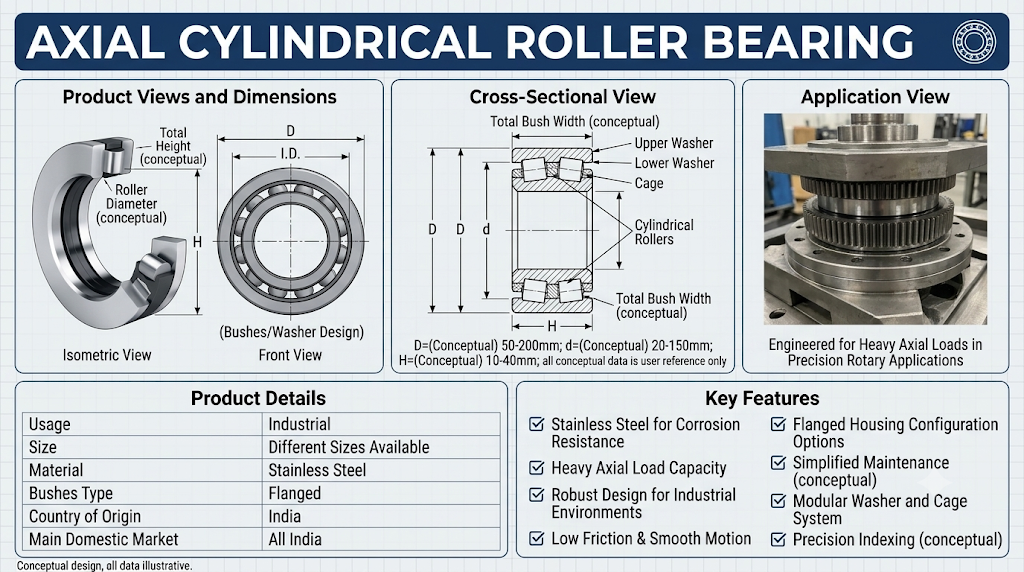
| Usage | Industrial |
|---|---|
| Size | Different Sizes Available |
| Material | Stainless Steel |
| Bushes Type | Flanged |
| Main Domestic Market | All India |
What Is an Axial Cylindrical Roller Bearing?
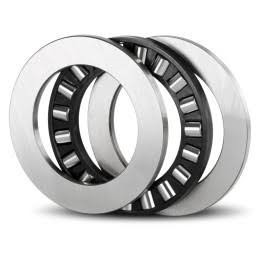
An axial cylindrical roller bearing is a thrust bearing that uses short, roller-shaped elements instead of balls between its two flat washers. Because a roller touches the washer along a line rather than at a single point like a ball does, this bearing can spread out a much heavier load and resist bending or flattening under pressure.
This higher load capacity comes with a trade-off: axial cylindrical roller bearings generally run at lower speed than a ball-type thrust bearing, since the rolling and sliding action of a cylindrical roller creates more internal friction and heat at high revolutions. That is exactly why this bearing type is chosen for slow, heavy-duty presses and mills rather than fast-turning spindles.
Most versions are supplied as a caged roller and cage assembly, meant to be fitted between a shaft washer and a housing washer that are ordered separately, giving the customer flexibility over exact bore and outer diameter needs.
Axial Cylindrical Roller Bearing vs Needle Roller Thrust Bearing: What Is the Difference?
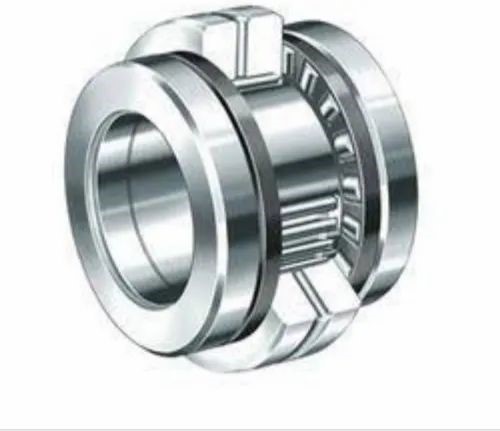
A needle roller thrust bearing uses very thin, long needle rollers arranged in a cage, giving good load capacity while keeping the overall bearing height low, which suits tight axial space. An axial cylindrical roller bearing uses shorter, thicker rollers with a larger diameter, giving it a higher load rating and longer working life under heavy, continuous thrust, though it needs more axial space to fit. Where housing space is very limited, the needle type often wins; where raw load-carrying strength matters more than compactness, the cylindrical roller type is the stronger option.
Types of Axial Cylindrical Roller Bearings
- Single Direction Caged Roller Bearing (81100 Series): This standard type carries thrust load from one direction only and uses a cage to keep the rollers evenly spaced, suiting general press and gearbox duty.
- Heavy Series Caged Roller Bearing (81200/81400 Series): Built with larger rollers and a thicker cross-section, this version is chosen for the heaviest presses, mills, and forging equipment.
- Bearing and Washer Kit (K-Prefix Sets): Supplied as a complete set with matched shaft and housing washers, this option saves the customer from sourcing washers separately.
- Cylindrical Roller Thrust Bearing with Sphered Seating: A slightly curved seating washer allows small self-alignment, protecting the roller set from uneven load caused by minor shaft misalignment.
Axial Cylindrical Roller Bearing: Part Numbers, Sizes & Applications
The table below shows common series of axial cylindrical roller bearings, their general size range, and typical heavy-duty use. Share your load figures and shaft size with our technical team for an exact recommendation.
| Part Number | Bore (mm) | Outer Dia. (mm) | Height (mm) | Bearing Type | Typical Application |
|---|---|---|---|---|---|
| 81107 TN | 35 | 52 | 12 | Axial Cylindrical Roller Bearing (single direction, caged) | Hydraulic press ram thrust support |
| 81212 TN | 60 | 95 | 26 | Axial Cylindrical Roller Bearing (single direction, heavy) | Rolling mill roll-neck thrust end |
| 81412 | 60 | 130 | 42 | Axial Cylindrical Roller Bearing (large bore, heavy series) | Forging press screw drive support |
| 89320 | 100 | 170 | 42 | Axial Cylindrical Roller Bearing (with roller and washer set) | Vertical extrusion press thrust point |
| 81108 M | 40 | 60 | 13 | Axial Cylindrical Roller Bearing (single direction, precision) | Injection moulding clamping unit shaft |
| K81214 TN | 70 | 105 | 27 | Axial Cylindrical Roller Bearing (bearing plus washer kit) | Crane slewing ring thrust support |
Benefits of Choosing the Right Axial Cylindrical Roller Bearing
- Very High Load Capacity: Line contact between roller and washer spreads heavy load better than a ball-type bearing.
- Strong Under Shock Load: The solid roller and washer design resists sudden, heavy pressing force well.
- Good for Slow, Heavy Duty: Well suited to presses and mills that run at lower speed but carry very high load.
- Flexible Washer Options: Separate or kit-supplied washers let buyers match the exact bore and outer size needed.
- Long Life Under Repeated Load: Hardened, precision-ground rollers resist wear even after years of repeated pressing cycles.
- Cost-Effective for Heavy Jobs: Often more economical than oversizing a ball thrust bearing to reach the same load rating.
Country-Wise Use of Axial Cylindrical Roller Bearings in Our Export Network
Heavy industry needs in each export market shape how axial cylindrical roller bearings are typically used. Here is a short country-by-country look:
| Export Market | Where This Bearing Is Put to Work |
|---|---|
| Sri Lanka | Rubber block presses and heavy calendering rollers push strong axial load through the shaft, which is where this roller-based thrust bearing performs best. |
| South Africa | Ore crushing and forging equipment in heavy industry needs a bearing that keeps carrying shock-heavy thrust load without early roller damage. |
| UAE | Steel fabrication presses and heavy construction equipment use these bearings on rams and screw drives that see very high one-direction load. |
| Nigeria | Oilfield drilling equipment and heavy earthmoving machinery need a thrust bearing tough enough for rough duty and infrequent servicing. |
| Egypt | Cement clinker grinding mills and sugar mill crushers use this bearing type to handle constant, heavy end-thrust from the milling process. |
| Indonesia | Palm oil expeller presses generate very high axial push during oil extraction, a job this roller-based bearing is specifically built for. |
| Thailand | Rubber and tyre-making presses use these bearings on hydraulic ram shafts that repeatedly apply strong, one-direction pressing force. |
| Kuwait | Petrochemical plant compressors and heavy valve systems use this bearing where load is high but shaft speed stays low to moderate. |
| Worldwide | Any heavy press, mill, or gearbox with strong one-direction thrust load at low to moderate speed is a strong match for this bearing type. |
How to Select the Right Axial Cylindrical Roller Bearing
- Calculate Peak Thrust Load: Heavy or shock-prone jobs usually call for the heavy series over a standard caged type.
- Check Available Axial Space: Compare the bearing height against your housing depth before finalising the series.
- Confirm Running Speed: Very high speed needs may point toward an angular contact ball bearing instead.
- Decide on Washer Sourcing: Choose a complete kit if you prefer matched washers included with the bearing.
Common Mistakes to Avoid When Choosing an Axial Cylindrical Roller Bearing
- Running It Above Rated Speed: Excess speed causes rapid heat build-up and early roller and washer wear.
- Ignoring Washer Flatness: An uneven or worn washer surface leads to uneven load across the rollers.
- Mismatching Bearing and Washer Sizes: Separately sourced washers must match the roller set exactly to avoid poor contact.
- Under-Estimating Shock Load: Choosing a standard series where sudden heavy load is expected shortens bearing life quickly.
Simple Maintenance Tips for Longer Life
Check for unusual heat build-up around the bearing housing during routine rounds, since this often points to speed or lubrication trouble. Inspect the washer surfaces for pitting or flat spots whenever the bearing is opened up for service, as damaged washers wear out a new roller set quickly. Keep to the recommended heavy-duty grease schedule, since high load pushes lubricant out of the contact zone faster than in light-duty bearings.
Get a fast export quote for axial cylindrical roller bearings from Shree Balaji Export — dependable delivery to Sri Lanka, South Africa, UAE, Nigeria, Egypt, Indonesia, Thailand, Kuwait and worldwide.
Frequently Asked Questions
It is used to carry very heavy thrust load at low to moderate speed, commonly in hydraulic presses, rolling mills, forging equipment, and heavy gearboxes.
The cylindrical roller type uses shorter, thicker rollers for higher load capacity but needs more axial space, while the needle type uses thin, long rollers that save space but carry somewhat less load.
Not ideally. It is designed for slow to moderate speed under heavy load; very high-speed thrust needs are usually better served by an axial angular contact ball bearing.
Some are supplied as a complete kit with shaft and housing washers, while others are sold as just the roller and cage assembly, needing separately ordered washers.
Shree Balaji Export supplies axial cylindrical roller bearings to Sri Lanka, South Africa, the UAE, Nigeria, Egypt, Indonesia, Thailand, Kuwait, and other markets worldwide, with complete export documentation and dependable delivery.
Common signs include rising housing temperature, a grinding or knocking sound under load, and visible flat spots or pitting on the rollers or washers during inspection.
 Shree Balaji Exports
Specialize in delivering top-quality bearings and related solutions to meet the diverse needs of various industries.