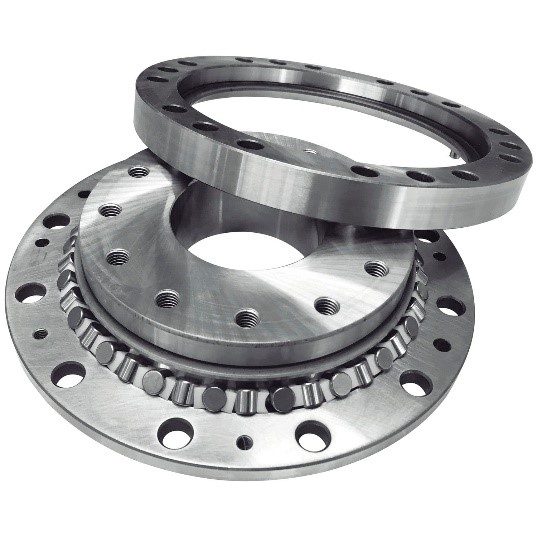
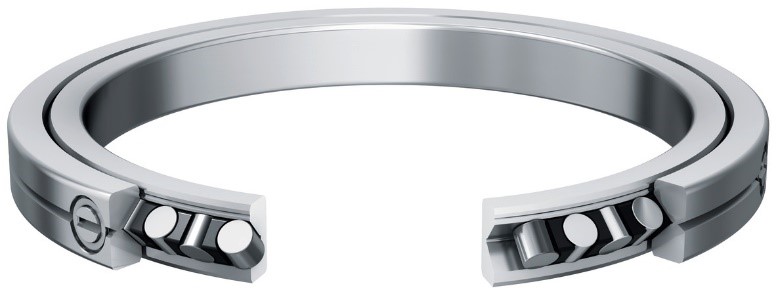
A crossed roller bearing is a single, slim ring bearing with rollers placed at right angles to each other in a V-shaped groove, so it can carry radial load, axial load, and tilting moment load all at once. It is widely used in robot joints, rotary tables, and precision indexing equipment.
Machining the V-shaped groove of a crossed roller bearing to a tight, even tolerance is one of the most demanding parts of our production process at Shree Balaji Export, since any unevenness here shows up directly as wobble in the finished joint or table. Our precision line grinds each raceway and roller set to close tolerance and checks runout before every bearing is packed. We supply these compact, combined-load bearings to customers in Sri Lanka, South Africa, the UAE, Nigeria, Egypt, Indonesia, Thailand, and Kuwait, with export documents prepared alongside each shipment for a smooth customs process. Visit Shree Balaji Export to see our full range and request a quotation.
Product Specifications
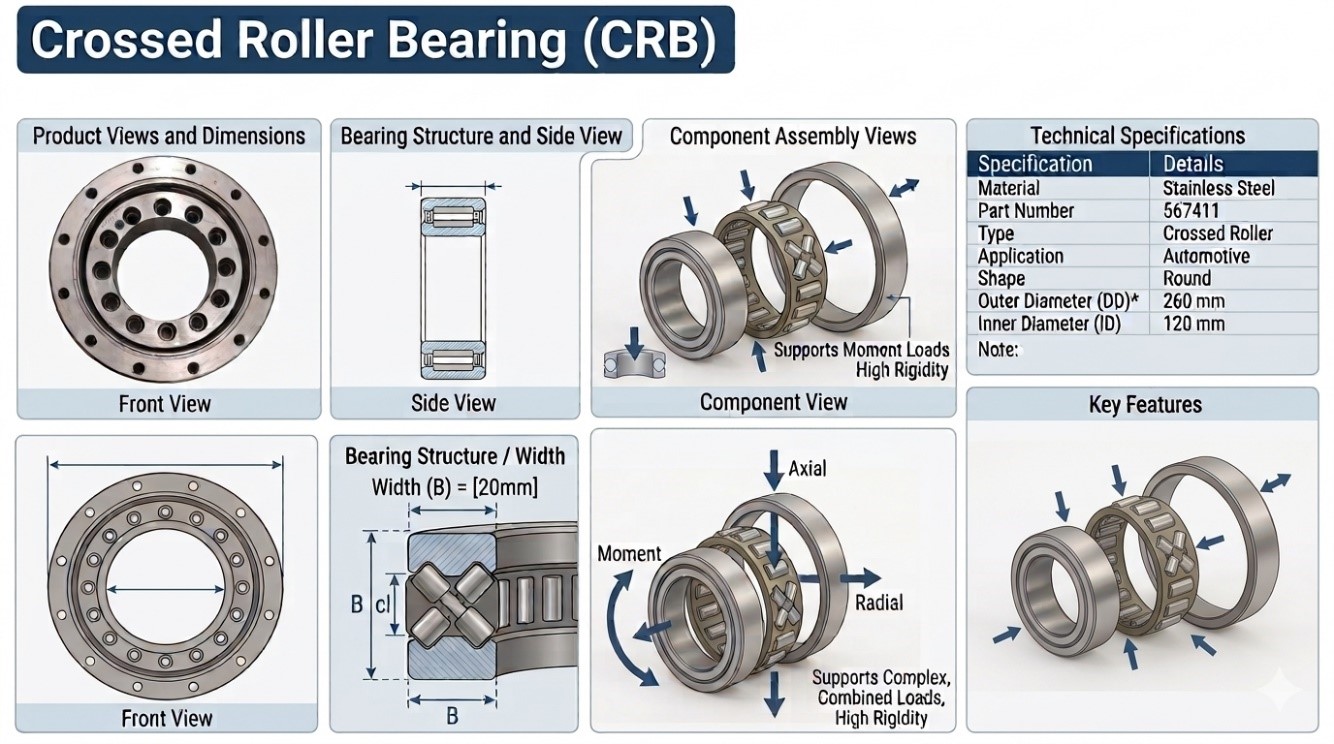
| Part Number | 567411 |
|---|---|
| Material | Stainless Steel |
| Type of Bearing | Crossed |
| Usage/Application | Automotive |
| Shape | Round |
| Outer Diameter | 260 mm |
| Inner Diameter | 120 mm |
What Is a Crossed Roller Bearing?
A crossed roller bearing is a single, thin ring bearing where cylindrical rollers are placed at right angles to each other, one after another, inside a V-shaped groove. Because neighbouring rollers sit at 90 degrees to one another, the bearing can resist load pushing from the side, load pushing along its axis, and a tilting or moment load all in one compact part.
This all-in-one ability is what sets a crossed roller bearing apart from a normal radial or thrust bearing, which usually can only manage one or two of these load types well. Many designs also come as a separable inner and outer ring, which makes fitting onto a shaft and housing much simpler than pressing a solid bearing into place.
Because the whole assembly is slim and highly accurate, crossed roller bearings are a favourite in machines where precise, low-wobble rotation matters just as much as load capacity, such as robot joints and rotary indexing tables.
Crossed Roller Bearing vs Slewing Ring Bearing: What Is the Difference?
A slewing ring bearing is also built to handle combined radial, axial, and moment load, but it is generally large, heavy, and used in big, slow-turning equipment like cranes and turntables. A crossed roller bearing does a similar combined-load job but in a much smaller, thinner, and more precise package, making it suited to compact, high-accuracy applications like robot arms and rotary stages rather than heavy civil or mining machinery. If the job needs huge diameters and heavy structural load, the slewing ring is the right family; if it needs compact size with high rotational accuracy, the crossed roller bearing is the better fit.
Types of Crossed Roller Bearings
- Separable Inner Ring Type (RB Series): The inner ring splits into two halves, making it easier to fit onto a shaft without disturbing the roller set, common in robot joints.
- Integrated Design Type (RU Series): Both rings are supplied as complete, solid pieces, giving high rigidity for rotary tables and indexing equipment that need a very stiff joint.
- Ultra-Thin Section Type: Built with a very slim cross-section, this version saves weight and space in compact robotics and medical equipment designs.
- Miniature Crossed Roller Bearing: A small-diameter version used in compact automation joints, laboratory instruments, and other space-limited precision devices.
Crossed Roller Bearing: Part Numbers, Sizes & Applications
The table below shows common series of crossed roller bearings, their general size range, and where each is typically fitted. Share your load direction and required accuracy with our technical team for an exact match.
| Part Number | Bore (mm) | Outer Dia. (mm) | Section Height (mm) | Bearing Type | Typical Application |
|---|---|---|---|---|---|
| RB 3010 | 30 | 55 | 13 | Crossed Roller Bearing (separable inner ring) | Small robot wrist joint |
| RU 178 | 130 | 228 | 26 | Crossed Roller Bearing (integrated design) | CNC rotary table indexing axis |
| RE 3510 | 35 | 60 | 13 | Crossed Roller Bearing (ultra-thin section) | Medical scanning gantry rotation |
| CRBH 5013 | 50 | 80 | 13 | Crossed Roller Bearing (high precision) | Semiconductor wafer handling stage |
| CRBT 205 A | 20 | 31 | 5 | Crossed Roller Bearing (miniature series) | Compact automation pick-and-place joint |
| RB 13025 | 130 | 190 | 25 | Crossed Roller Bearing (heavy duty) | Industrial robot base rotation joint |
Benefits of Choosing the Right Crossed Roller Bearing
- Handles Multiple Load Types at Once: One bearing manages radial, axial, and tilting load together.
- Very Low Wobble: Precise roller and raceway grinding keeps rotation accurate for sensitive equipment.
- Compact, Slim Design: Saves space compared to fitting three separate bearings for each load type.
- High Rigidity: Keeps its shape and accuracy under load, useful for repeatable positioning tasks.
- Easier Installation with Separable Rings: A split inner ring design simplifies mounting on many shaft types.
- Good Fit for Automation Growth: Well suited to robotics and precision machinery as automation use increases across industries.
Country-Wise Use of Crossed Roller Bearings in Our Export Network
Automation and precision equipment needs in each export market are shaping demand for crossed roller bearings in slightly different ways. Here is a short country-by-country look:
| Export Market | Where This Bearing Is Put to Work |
|---|---|
| Sri Lanka | Automated garment-cutting tables use these slim bearings on rotary indexing heads that must stay precise through long shifts. |
| South Africa | Growing local robotics and automation workshops fit these bearings into robot arm joints that need to move in more than one direction at once. |
| UAE | Advanced packaging and logistics centres use crossed roller bearings on rotary sorting tables that carry both spinning and tilting load. |
| Nigeria | Emerging assembly-line automation projects use this compact bearing type wherever a single joint must handle combined load in a tight space. |
| Egypt | Pharmaceutical and food-packaging machines use precision rotary tables fitted with this bearing for accurate, repeatable indexing. |
| Indonesia | Electronics assembly lines use crossed roller bearings in pick-and-place robot arms that need smooth, accurate rotation. |
| Thailand | Automotive parts inspection systems use rotary stages built around these bearings for precise, repeatable positioning. |
| Kuwait | Laboratory and medical equipment imported for hospitals uses this bearing type in scanning and positioning stages that need high accuracy. |
| Worldwide | Any joint or rotary stage that must carry radial, axial, and tilting load together in a slim, precise package is a strong match for this bearing. |
How to Select the Right Crossed Roller Bearing
- List All Expected Load Types: Note radial, axial, and moment load together, since this bearing is chosen for combined duty.
- Decide on Ring Style: Pick a separable inner ring for easier fitting, or an integrated design for higher rigidity.
- Confirm Required Accuracy: Very low-wobble tasks may need a higher precision grade than standard industrial use.
- Check Available Space: An ultra-thin or miniature version may be needed where space is very limited.
Common Mistakes to Avoid When Choosing a Crossed Roller Bearing
- Treating It Like a Standard Bearing: Fitting and preload instructions differ from normal radial or thrust bearings and must be followed closely.
- Applying Uneven Bolt Torque: Uneven tightening around the ring can introduce wobble even with a good-quality bearing.
- Ignoring Preload Specifications: Too little or too much preload affects both accuracy and expected working life.
- Choosing Standard Grade for High-Precision Work: Sensitive equipment usually needs a higher accuracy grade than general industrial parts.
Simple Maintenance Tips for Longer Life
Check for any increase in positioning error or wobble on a scheduled basis, since this is often the first visible sign of wear in a crossed roller bearing. Keep to the manufacturer's recommended grease type and interval, as these bearings often run in continuous, repeated-motion duty. Inspect mounting bolts for correct, even torque during routine service, since uneven clamping can quietly reduce accuracy over time.
Get a fast export quote for crossed roller bearings from Shree Balaji Export — reliable delivery to Sri Lanka, South Africa, UAE, Nigeria, Egypt, Indonesia, Thailand, Kuwait and worldwide.
Frequently Asked Questions
It is used wherever a single joint or rotary stage must handle radial load, axial load, and tilting moment load together, such as robot joints, rotary tables, and precision indexing equipment.
Both handle combined load types, but a slewing ring bearing is large and used in heavy, slow-turning equipment, while a crossed roller bearing is compact and built for precise, high-accuracy rotation in smaller machines.
Placing rollers at alternating right angles lets each roller resist a different load direction, so the bearing as a whole can manage radial, axial, and moment load in one slim design.
Yes, it is one of the most common bearing choices for robot joints, since it combines multiple load capabilities with high accuracy in a compact size.
Shree Balaji Export supplies crossed roller bearings to Sri Lanka, South Africa, the UAE, Nigeria, Egypt, Indonesia, Thailand, Kuwait, and other markets worldwide, with complete export documentation and dependable delivery.
Common signs include growing positioning error, unusual noise during rotation, and increased wobble or play when the joint or table is moved by hand.
 Shree Balaji Exports
Specialize in delivering top-quality bearings and related solutions to meet the diverse needs of various industries.