A roller thrust bearing is a bearing built to carry heavy axial load — the push that runs along the length of a shaft — rather than sideways load. It uses cylindrical, tapered, or needle rollers placed between two flat washers to support this end-on force.
Shree Balaji Export manufactures and exports roller thrust bearings and other precision bearing products to industrial buyers across Sri Lanka, South Africa, the UAE, Nigeria, Egypt, Indonesia, Thailand, and Kuwait. Every roller thrust bearing is checked for correct roller finish and flatness of the washer faces before it leaves the factory, and our export desk takes care of packing, paperwork, and shipping so your order reaches you complete and on schedule.
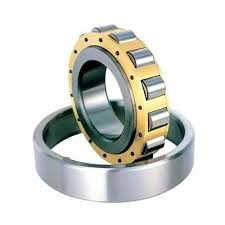
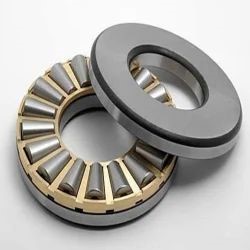
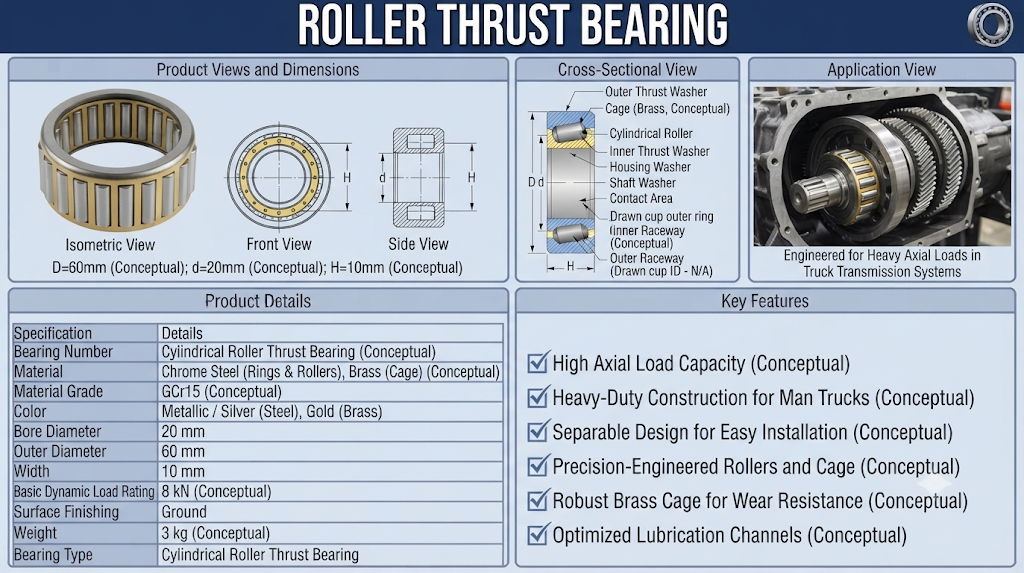
Product Details:
| Material | Chrome Steel |
|---|---|
| Material Grade | GCr15 |
| Bore Diameter | 20 mm |
| Outer Diameter | 60 mm |
| Width | 10 mm |
| Basic Dynamic Load Rating | 8 kN |
| Surface Finishing | Ground |
| Weight | 3 kg |
| Bearing Type | Cylindrical Roller Thrust Bearing |
What Is a Roller Thrust Bearing?
Most bearings are built to support a shaft from the side, resisting radial load. A roller thrust bearing works differently. It is designed to resist axial load, which is force pushing along the length of the shaft, such as the weight of a vertical pump shaft pressing straight down, or the end thrust from a gear meshing under load. Inside a roller thrust bearing, a set of rollers sits between two flat steel washers. As the shaft turns, the rollers roll in place between the washers, letting the shaft rotate freely while still carrying the heavy end-on push.
Roller Thrust Bearing vs Radial Bearing: The Key Difference
A radial bearing, like a common ball bearing, mainly carries load pushing sideways against the shaft and can handle only a small amount of end thrust. A roller thrust bearing is built the opposite way — it carries heavy axial (end) load very well but is not meant to support sideways load on its own. Many machines actually use both types together: a radial bearing to hold the shaft in place, and a roller thrust bearing to absorb the end push.
Types of Roller Thrust Bearings
Roller thrust bearings are grouped by roller shape, since the shape decides how much load and speed the bearing can handle:
- Cylindrical Roller Thrust Bearings: These use short, straight rollers set in a ring like the spokes of a wheel. They carry heavy pure axial load at low to medium speed and are common in machine tool spindles and gearboxes.
- Needle Roller Thrust Bearings: These use very thin, long rollers, which allow the bearing to fit into a very tight axial space. They are used in compact gearboxes, hand tools, and small machinery where space is limited.
- Tapered Roller Thrust Bearings: Built with cone-shaped rollers, these bearings can handle a mix of axial load and some radial load together. They are used in steering systems, worm gear drives, and certain automotive applications.
- Spherical Roller Thrust Bearings: These use barrel-shaped rollers set on a curved raceway, which lets the bearing self-align slightly if the shaft is not perfectly straight. They carry very heavy axial load and some radial load together, and are used in extruders, rolling mills, and crane equipment.
Roller Thrust Bearing: Part Numbers, Sizes & Applications
The table below shows common roller thrust bearing series, their typical size range, and where each type is generally used. Share your shaft size and expected load with our technical team for an exact match.
| Part Number | Bore (mm) | Outer Dia. (mm) | Height (mm) | Bearing Type | Typical Application |
|---|---|---|---|---|---|
| 81107 | 35 | 52 | 12 | Cylindrical Roller Thrust | Machine tool spindle end load |
| 81112 | 60 | 85 | 17 | Cylindrical Roller Thrust | Vertical pump shaft support |
| AXK 1024 | 10 | 24 | 2 | Needle Roller Thrust | Compact gearbox, small machinery |
| T811 | 25.4 | 50.8 | 15.5 | Tapered Roller Thrust | Steering columns, worm gear drives |
| 29320 | 100 | 170 | 42 | Spherical Roller Thrust | Extruder screw end load, rolling mills |
| 29414 | 70 | 150 | 45 | Spherical Roller Thrust | Crane hook blocks, heavy presses |
Benefits of Using the Right Roller Thrust Bearing
-
1. High Axial Load Capacity: A roller thrust bearing spreads heavy end load across several rollers, letting it support far more force than a simple thrust washer, which benefits heavy machinery in South Africa and Egypt.
2. Compact, Space-Saving Design: Needle and cylindrical roller thrust bearings fit into a thin axial space, helping equipment builders in Indonesia and Thailand keep gearboxes and drives compact.
3. Smooth, Low-Friction Rotation: Rolling contact instead of plain sliding contact reduces friction and heat build-up, which is useful for continuously running pumps and fans in the UAE and Kuwait.
4. Long Service Life Under Steady Load: With correct lubrication, roller thrust bearings run for years under constant axial load, lowering maintenance visits for plants in Nigeria and Sri Lanka.
5. Available in Many Sizes for Easy Replacement: Standard part-number series make it simple to find a matching replacement bearing, even for older or imported machines.
Where Roller Thrust Bearings Are Used Across Our Export Markets
- Sri Lanka: Roller thrust bearings support vertical pump shafts in water supply systems and the drive shafts of small processing machinery in tea and rubber factories.
- South Africa: Mining equipment and heavy conveyor drive gearboxes use roller thrust bearings to absorb the constant end load created by angled drive shafts.
- UAE: HVAC systems, cooling tower fans, and building service pumps rely on roller thrust bearings to carry the weight of vertical rotating shafts.
- Nigeria: Generator sets and borehole water pumps use roller thrust bearings to support shaft weight and end thrust in continuous-duty operation.
- Egypt: Irrigation pump stations and textile machinery gearboxes use roller thrust bearings where shaft end load must be carried reliably for long hours.
- Indonesia: Palm oil mill presses and crushing equipment use spherical and cylindrical roller thrust bearings to handle heavy, continuous axial pressing force.
- Thailand: Rice mill machinery and packaging equipment gearboxes use roller thrust bearings to support shaft end load in compact drive housings.
- Kuwait: Industrial fans and oil and gas support equipment use roller thrust bearings to handle the axial load created by vertical shaft arrangements.
How to Select the Right Roller Thrust Bearing
-
1. Confirm the Load Direction: Check whether your shaft mainly faces axial (end) load, radial (side) load, or a mix of both, since this decides which roller shape suits your machine.
2. Measure Bore, Outer Diameter, and Height: These three sizes, taken from the shaft and housing, are needed to match a correct roller thrust bearing series.
3. Check Available Axial Space: If space along the shaft is limited, a needle roller thrust bearing is often the best fit because of its thin design.
4. Plan the Lubrication: Roller thrust bearings need a steady supply of clean grease or oil, so confirm your lubrication method before final selection.
Request your roller thrust bearing export quote today — fast, reliable delivery from Shree Balaji Export to Sri Lanka, South Africa, UAE, Nigeria, Egypt, Indonesia, Thailand, and Kuwait.
Frequently Asked Questions
It is used to support heavy axial (end) load on a rotating shaft, such as the weight of a vertical shaft or the end push from a loaded gear, while still letting the shaft turn smoothly.
A roller thrust bearing uses cylindrical, tapered, or spherical rollers and can carry much heavier axial load than a ball thrust bearing of the same size, though it usually runs at a somewhat lower speed.
Most roller thrust bearings are made mainly for axial load and carry very little radial load. Tapered and spherical roller thrust bearing designs can handle a limited amount of radial load along with the axial load.
Yes. Roller thrust bearings need regular lubrication with grease or oil to reduce friction and prevent premature wear, especially in heavy-duty, continuous-running equipment.
Shree Balaji Export supplies roller thrust bearings and other precision bearing products to Sri Lanka, South Africa, the UAE, Nigeria, Egypt, Indonesia, Thailand, Kuwait, and other markets worldwide, with full export documentation and reliable delivery.
Common signs include a grinding or rattling noise under load, visible end-play or looseness in the shaft, unusual heat at the bearing location, and grease leakage or discoloured grease found during inspection.
 Shree Balaji Exports
Specialize in delivering top-quality bearings and related solutions to meet the diverse needs of various industries.