A bearing housing is a mounted frame, usually made of cast iron, pressed steel, or plastic, that holds a bearing and lets a rotating shaft be supported outside a motor or gearbox. Common types include pillow block housings, flange block housings, and take-up housings, and they are widely used on conveyors, fans, pumps, and general industrial machine shafts.
Getting the bore fit and the mounting face flat and square is the detail we focus on most when finishing bearing housings at Shree Balaji Export, since a poor fit or an uneven base can cause shaft misalignment right from the first day of use. Every housing is checked for bore size, base flatness, and correct bolt-hole spacing before it leaves our facility, with export paperwork prepared alongside each shipment. We supply these housings to customers in Sri Lanka, South Africa, the UAE, Nigeria, Egypt, Indonesia, Thailand, and Kuwait, among other export markets. Visit Shree Balaji Export to see our full range and request a quotation.
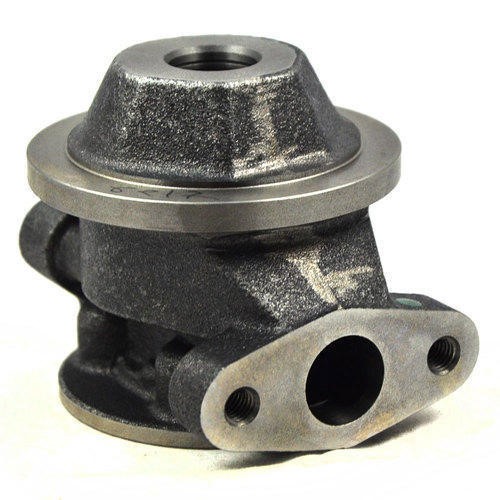
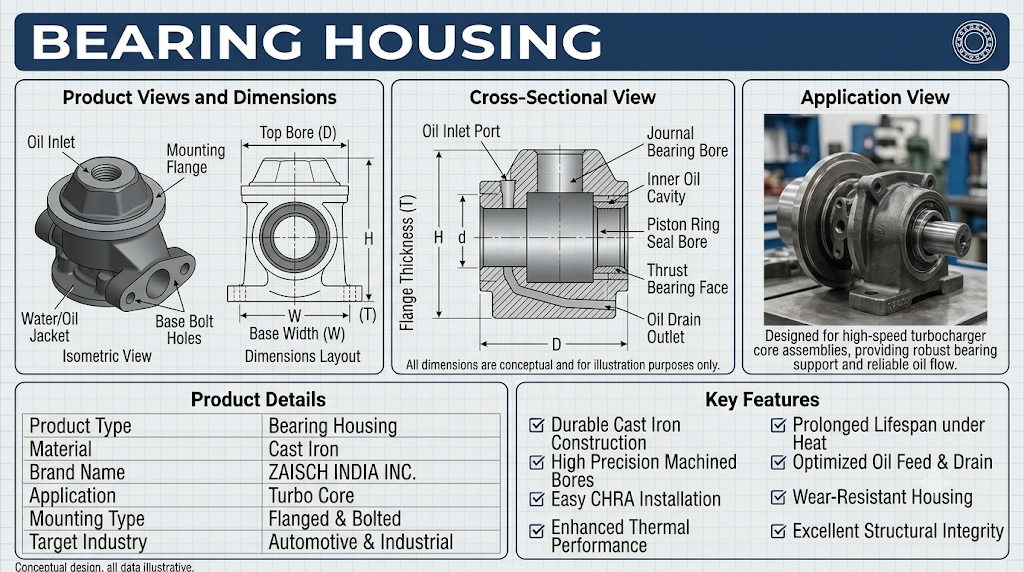
Product Specifications
| Material | Cast Iron |
|---|---|
| Application | Turbo Core |
| Product Type | Bearing Housing |
| Brand Name | ZAISCH INDIA INC. |
| Features | Durable Material, High Precision, Easy Installation, Enhanced Performance, Long Lifespan |
What Is a Bearing Housing?
A bearing housing is the outer frame or block that a bearing sits inside once it is fitted onto a shaft. On its own, a bearing has nothing to bolt onto a machine frame, so the housing gives it a solid, aligned mounting point, along with a bore machined or moulded to hold the bearing's outer surface securely.
Most bearing housings also protect the bearing itself, keeping out dust and moisture while holding grease or oil in place, which helps the bearing run cooler and last longer between services.
Because so many shafts in a factory run outside a motor or gearbox, from conveyor rollers to fan shafts, bearing housings are one of the most widely used mounting parts in general industrial machinery.
Bearing Housing vs the Bearing It Holds: What Is the Difference?
A bearing is the rolling part, made of balls or rollers between an inner and outer ring, that actually lets the shaft spin with low friction. A bearing housing is the surrounding frame that holds this bearing and bolts down onto the machine, so the two parts always work as a pair rather than as substitutes for each other.
Choosing the right bearing decides how much load and speed the shaft can handle, while choosing the right housing decides how the assembly is mounted, how easily it can be aligned, and how well it stands up to dust, moisture, or vibration at the installation site.
Common Types of Bearing Housings
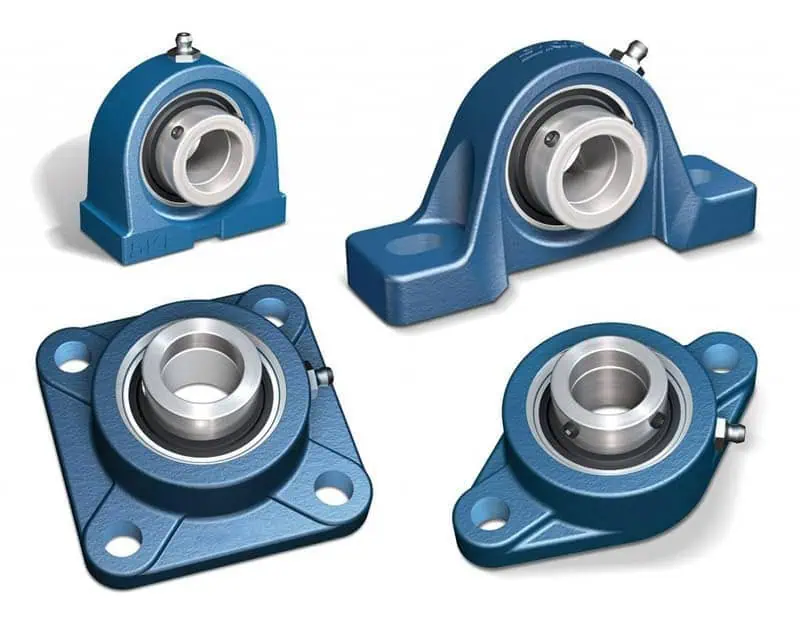
- Pillow Block Housing: A block with two bolt holes that sits flat on a machine base, one of the most common housing styles for horizontal shafts such as conveyor rollers.
- Flange Block Housing: A square or round flange with two or four bolt holes, used to mount a bearing on a vertical frame or wall rather than a flat base.
- Take-Up Housing: A housing that can slide within a track, letting the whole bearing and shaft position move slightly to adjust belt or chain tension.
- Cartridge or Tapped Base Housing: A compact housing that fits into a machined bore or bolts from underneath, often chosen for space-limited or higher-speed applications.
Bearing Housing Materials Worth Knowing
Cast iron housings are strong and give good vibration damping, making them the standard choice for most factory machinery. Pressed steel housings are lighter and lower in cost, suiting lighter-duty equipment. Thermoplastic or polymer housings resist rust and are easy to wash down, which is why they are common in food, beverage, and other hygiene-sensitive settings.
Bearing Housing: Part Numbers, Sizes & Applications
The table below lists common bearing housing types, their general size range, and where each is typically fitted. Share your shaft size and mounting surface with our technical team for an exact match.
| Part Number | Shaft Bore (mm) | Base Length (mm) | Center Height (mm) | Housing Type | Typical Application |
|---|---|---|---|---|---|
| P 204 | 20 | 108 | 33 | Two-bolt pillow block, cast iron | General-purpose conveyor shaft support |
| P 210 | 50 | 168 | 54 | Two-bolt pillow block, cast iron | Heavy-duty elevator and conveyor shafts |
| FB 204 | 20 | 92 | 22 | Square flange block, 4-bolt | Compact frame-mounted shaft support |
| FL 208 | 40 | 128 | 34 | Round flange block, 4-bolt | Vertical mounting on machine frames |
| TU 210 | 50 | 210 | 54 | Take-up housing | Adjustable-tension conveyor belt shaft |
| PL 206 | 30 | 105 | 33 | Thermoplastic pillow block | Washdown food and beverage equipment |
Benefits of Choosing the Right Bearing Housing
- Correct Shaft Alignment: A flat, accurately bored housing keeps the shaft running true from day one.
- Protection From Dust and Moisture: A well-sealed housing helps keep contaminants away from the bearing inside.
- Faster Fitting and Replacement: Standard bolt patterns make swapping a housing and bearing set quicker on site.
- Longer Bearing Life: Good grease retention and support reduce heat build-up and early wear.
- Flexible Mounting Options: Pillow block, flange, and take-up styles suit different frame layouts and shaft positions.
- Material Choice for the Environment: Cast iron, pressed steel, or thermoplastic options suit different duty and hygiene needs.
Bearing Housings Across Our Export Markets
Local industries shape how bearing housings are used across our different export markets. Here is a short, market-by-market look:
| Export Market | How Bearing Housings Are Used There |
|---|---|
| Sri Lanka | Ceramic tile and ceramics manufacturing plants fit pillow block housings on their conveyor and mixing shaft lines. |
| South Africa | Cement and quarry material handling operations use rugged cast iron housings on crusher feed and conveyor shafts. |
| UAE | Food and beverage bottling and packaging lines use pressed steel or thermoplastic housings where washdown and hygiene matter. |
| Nigeria | Poultry and animal feed mills use pillow block housings on their mixing and conveyor shaft lines. |
| Egypt | Fertiliser and chemical processing plants use flange block housings on rotating shafts exposed to dust and chemicals. |
| Indonesia | Cement and building material plants use heavy-duty cast iron housings on their crushing and conveying equipment. |
| Thailand | Paper and pulp mills use take-up housings on long conveyor runs that need shaft tension adjustment. |
| Kuwait | Construction and infrastructure projects use bearing housings on site equipment such as batching plants and conveyors. |
| Worldwide | Any shaft running outside a motor or gearbox generally needs a bearing housing matched to its bearing type and mounting surface. |
How to Select the Right Bearing Housing
- Match the Bearing Bore: Confirm the housing bore matches the outer diameter of the bearing being fitted.
- Choose a Mounting Style: Pick pillow block for a flat base, flange block for a vertical frame, or take-up for adjustable tension.
- Consider the Working Environment: Dusty, wet, or hygiene-sensitive settings usually call for sealed or thermoplastic housings.
- Check Bolt Hole Spacing: Confirm the mounting holes line up with the machine frame before ordering.
Common Mistakes to Avoid When Choosing a Bearing Housing
- Ignoring Base Flatness: An uneven mounting surface can twist the housing and shorten bearing life.
- Wrong Material for the Environment: A plain cast iron housing in a wet, hygiene-sensitive area can rust and fail early.
- Overlooking Seal Type: Standard seals may not keep out fine dust or heavy washdown water where extra protection is needed.
- Poor Bolt Tightening: Loose or uneven mounting bolts can allow the housing to shift and cause misalignment.
Simple Maintenance Tips for Longer Life
Check mounting bolts for tightness on a regular schedule, since a loose housing is one of the first signs of trouble on a running shaft. Follow the recommended greasing interval for the bearing fitted inside, and keep the housing area clean of dust build-up. Inspect seals for cracks or wear during routine service, since a damaged seal lets in dirt and moisture that shorten bearing life.
Request a fast export quote for bearing housings from Shree Balaji Export — dependable delivery to Sri Lanka, South Africa, UAE, Nigeria, Egypt, Indonesia, Thailand, Kuwait and worldwide.
Frequently Asked Questions
It is used to hold a bearing in place and mount it onto a machine frame, letting a rotating shaft be supported outside a motor or gearbox, as seen on conveyors, fans, pumps, and general machine shafts.
A bearing is the rolling part that lets a shaft spin with low friction, while a bearing housing is the surrounding frame that holds the bearing and bolts down onto the machine.
A take-up housing is built for this purpose, since it can slide within a track to adjust the position of the shaft and change belt or chain tension.
Yes, thermoplastic housings resist rust and are easy to wash down, which makes them a common choice for food, beverage, and other hygiene-sensitive equipment.
Shree Balaji Export supplies bearing housings to Sri Lanka, South Africa, the UAE, Nigeria, Egypt, Indonesia, Thailand, Kuwait, and other markets worldwide, with complete export documentation and dependable delivery.
Common signs include cracks in the housing body, a loose or worn bore that no longer holds the bearing tightly, and visible rust or damage around the mounting base.
 Shree Balaji Exports
Specialize in delivering top-quality bearings and related solutions to meet the diverse needs of various industries.