A linear guideway is a straight rail and sliding block set that lets a machine part move back and forth in a perfectly straight line, with very little friction and very high accuracy.
It is widely used in CNC machines, 3D printers, robots, and automation equipment wherever a smooth, precise, repeatable straight-line motion is needed.
Smooth, wobble-free straight-line movement is what separates an accurate machine from an average one, and the linear guideway is the part quietly doing that job. At Shree Balaji Export, we supply linear guideway rails and blocks alongside our bearing range, so machine builders get matched, ready-to-fit motion components in one order. Our team checks rail length, block preload, and accuracy class before packing each shipment, with export documents prepared for smooth customs clearance. Visit Shree Balaji Export to check stock and request a quote.
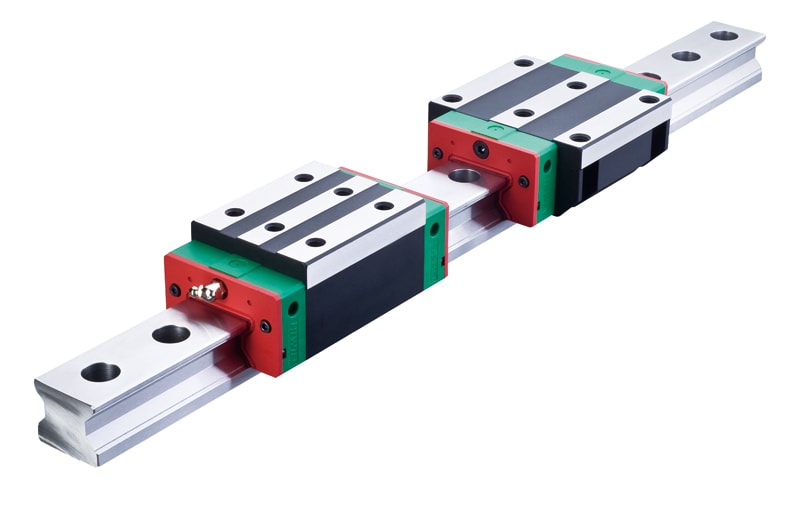
| Usage/Application | Rail Block |
|---|---|
| Size | 28X42X11 mm |
| Material | Stainless Steel |
| Color | Silver |
| Features | Durable |
| Packaging Type | Box |
What Is a Linear Guideway?
A linear guideway is a motion system made of two main parts: a long, straight rail, and a block (also called a carriage) that slides along it. Inside the block, small steel balls or rollers move in a loop between the block and the rail, so the block glides with very little friction instead of dragging or scraping.
This design lets a machine part - such as a cutting head, a robot arm segment, or a moving table - travel back and forth in a perfectly straight path, again and again, without losing accuracy over time. That is why linear guideways are a core part of CNC machines, 3D printers, and many kinds of automation equipment.
Linear Guideway vs Round Shaft Guide: What Is the Difference?
A round shaft guide uses a simple cylindrical rod with a matching linear bearing sliding over it. It is lower cost and easy to fit but offers less rigidity and can flex slightly under load, especially over longer spans.
A linear guideway uses a profiled (shaped) rail and a matching block with multiple rows of balls or rollers, which grip the rail from several directions at once. This gives it much higher rigidity, better accuracy, and a higher load capacity, making it the preferred choice for precision machinery and heavier-duty motion axes.
Types of Linear Guideways
- Miniature Guideways (MGN / MGW Series): Small and lightweight, built for compact equipment such as 3D printers, small pick-and-place machines, and lab instruments.
- Standard Guideways (HG Series): The most common type, with a four-row ball contact design that handles load evenly from multiple directions. A strong general choice for CNC machines and automation axes.
- Economy / Quiet-Running Guideways (EG / QE Series): Designed for smoother, quieter movement, suited to packaging lines and machines where noise and vibration need to stay low.
- High Rigidity Guideways (RG Series): Built with a reinforced block for extra stiffness, used where heavy cutting forces or very high precision are both required at once.
- Roller-Type Guideways: Use rollers instead of balls for even higher load capacity, common in large and heavy machine tools.
Linear Guideway Series, Size & Applications
The table below is a general guide to common linear guideway series, their typical rail width, and where each is used. Share your load direction, travel length, and required accuracy with our technical team for an exact match.
| Guideway Series | Rail Width Range | Block Design | Typical Application |
|---|---|---|---|
| MGN / MGW (Miniature) | 7 mm - 15 mm | Compact, two-row ball contact | 3D printers, pick-and-place units, small instruments |
| HG Series (Standard) | 15 mm - 65 mm | Four-row circular-arc contact | CNC machine tools, general automation axes |
| EG / QE Series (Economy/Quiet) | 15 mm - 45 mm | Optimised for smooth, quiet running | Packaging machines, light-duty production lines |
| RG Series (High Rigidity) | 20 mm - 65 mm | Reinforced block for stiffness | Heavy cutting and high-precision machining centres |
| Roller Type Guideway | 25 mm - 65 mm | Rollers instead of balls | Heavy machine tools needing very high load capacity |
| Flanged Block Type | Various | Wider mounting surface, lower height | Applications with high moment load and limited height |
Benefits of Choosing the Right Linear Guideway
- High Positioning Accuracy: Keeps a moving part on the same precise path, run after run.
- Low Friction Movement: Rolling balls or rollers mean smoother, easier motion than plain sliding contact.
- Strong Load Handling: Multiple contact rows let the block support load from several directions at once.
- Long Service Life: A properly matched, well-lubricated guideway holds its accuracy for a long working life.
- Good Fit for Automation Growth: A reliable building block for CNC machines, robotics, and precision equipment as automation use expands.
Linear Guideway Demand Across Our Export Markets
Local industries in each export market lean on linear guideways in slightly different ways. Here is a short look across the countries we export to:
| Export Market | How Linear Guideways Support Local Industry |
|---|---|
| Sri Lanka | Garment-cutting and embroidery machines rely on light guideway axes for fast, repeatable head movement. |
| South Africa | Local machine shops fit standard HG-series guideways on retrofit and general-purpose CNC machines. |
| UAE | Advanced packaging lines use quiet-running guideway axes to keep high-speed filling and labelling accurate. |
| Nigeria | New automation and assembly cells use compact miniature guideways for pick-and-place style movement. |
| Egypt | Printing and converting machinery uses guideway axes for precise, repeatable positioning of print heads. |
| Indonesia | Electronics assembly lines use miniature guideways to move small components with fine accuracy. |
| Thailand | Automotive tooling and jig-and-fixture builders use rigid guideway series for repeatable positioning work. |
| Kuwait | Laboratory and inspection equipment imported for local industry uses precision guideways for steady, fine motion. |
| Worldwide | Any axis that must move in a straight line with high accuracy and low friction is a good match for a linear guideway. |
How to Select the Right Linear Guideway
- Check the Load and Direction: Note radial, reverse-radial, and side load, since guideways are rated differently in each direction.
- Confirm the Required Accuracy: High-precision machining needs a tighter accuracy class than general automation.
- Decide on Preload Level: Higher preload increases rigidity but can also increase friction and heat.
- Match the Rail Length to Travel Distance: Choose a rail long enough for the full range of motion needed, with some margin.
Common Mistakes to Avoid When Choosing a Linear Guideway
- Ignoring Moment Load: A guideway chosen only for straight-line load may fail under twisting or tipping forces.
- Skipping Proper Lubrication Planning: Dry running quickly increases friction and shortens service life.
- Uneven Mounting Surface: An uneven base can twist the rail slightly and reduce accuracy.
- Choosing Standard Grade for High-Precision Work: Sensitive equipment usually needs a higher accuracy class than general industrial use.
Simple Maintenance Tips for Longer Life
Check for any increase in noise, vibration, or resistance along the travel path on a scheduled basis, since this is often the first sign of wear or contamination. Keep to the recommended lubrication interval and grease type, as dry or dirty rails wear out much faster than well-maintained ones. Wipe down exposed rail surfaces regularly in dusty environments, since trapped grit can score the rail and shorten block life.
Need precision-matched linear guideways for your next build? Get a fast export quote from Shree Balaji Export - trusted delivery to Sri Lanka, South Africa, UAE, Nigeria, Egypt, Indonesia, Thailand, Kuwait, and worldwide.
Frequently Asked Questions
It is used to guide a moving machine part in a straight, accurate path, such as in CNC machines, 3D printers, robots, and general automation equipment.
A linear guideway uses a profiled rail and multi-row block for high rigidity and accuracy, while a round shaft guide uses a simple round rod and bearing, offering lower cost but less stiffness.
Preload removes internal looseness between the balls or rollers and the rail, which increases rigidity and keeps positioning more accurate under load.
Yes, linear guideways are one of the most common choices for CNC machine axes, since they combine high accuracy with strong load capacity in a compact design.
Shree Balaji Export supplies linear guideways to Sri Lanka, South Africa, the UAE, Nigeria, Egypt, Indonesia, Thailand, Kuwait, and other markets worldwide, with complete export documentation.
Common signs include unusual noise during travel, rough or uneven movement, and visible wear, pitting, or play in the block when checked by hand.
 Shree Balaji Exports
Specialize in delivering top-quality bearings and related solutions to meet the diverse needs of various industries.