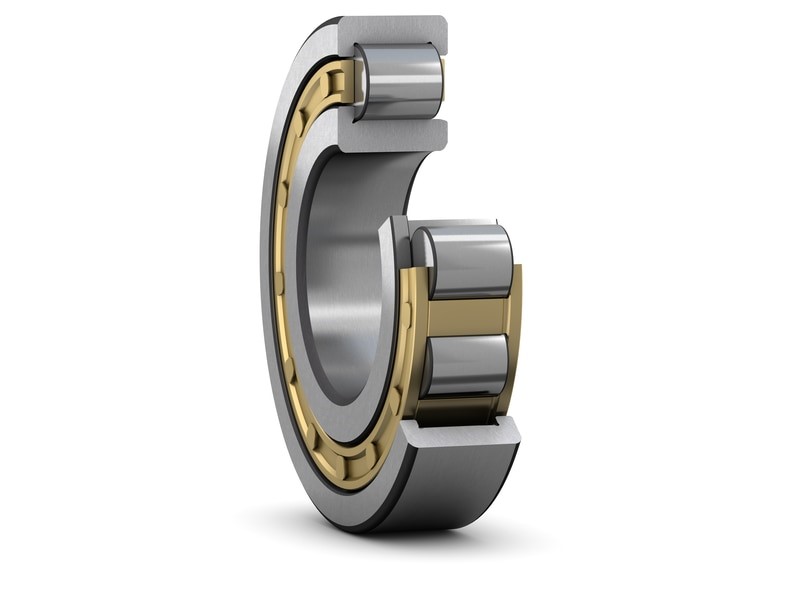
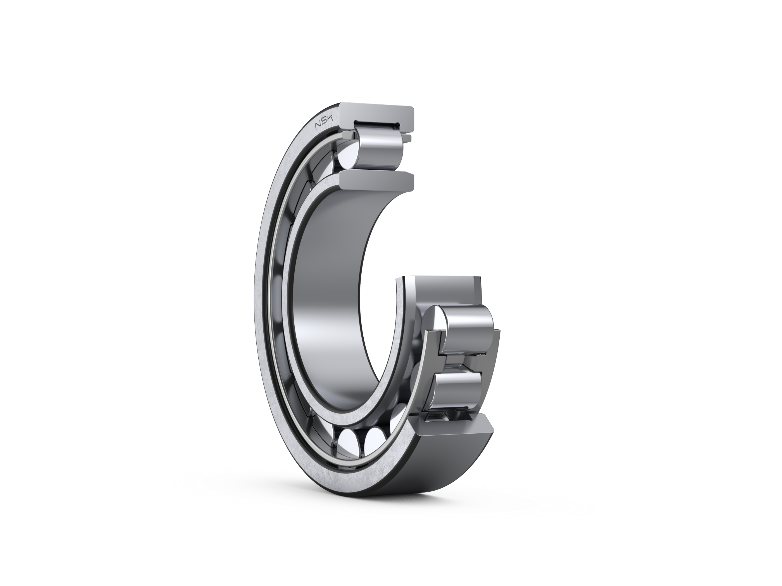
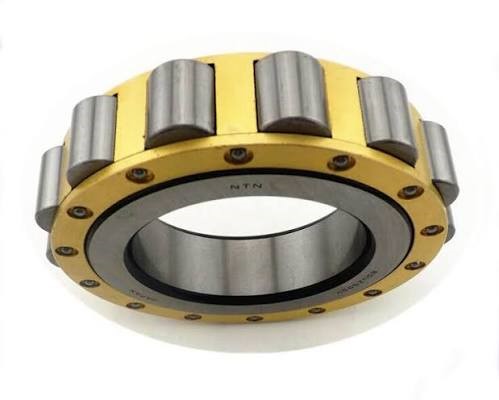
A cylindrical roller bearing is a roller bearing built to carry heavy radial load and run at high speed. Its straight, cylindrical rollers touch the raceway along a line instead of a point, so it can take much bigger loads than a ball bearing of the same size.
Shree Balaji Export manufactures and exports cylindrical roller bearings and heavy-duty roller bearing units to industrial buyers in Sri Lanka, South Africa, the UAE, Nigeria, Egypt, Indonesia, Thailand, and Kuwait. Every bearing is checked for roller finish, cage strength, and running clearance before it leaves our factory, and our export team manages packing, paperwork, and shipping so your order reaches you complete and on time.
Product Specifications
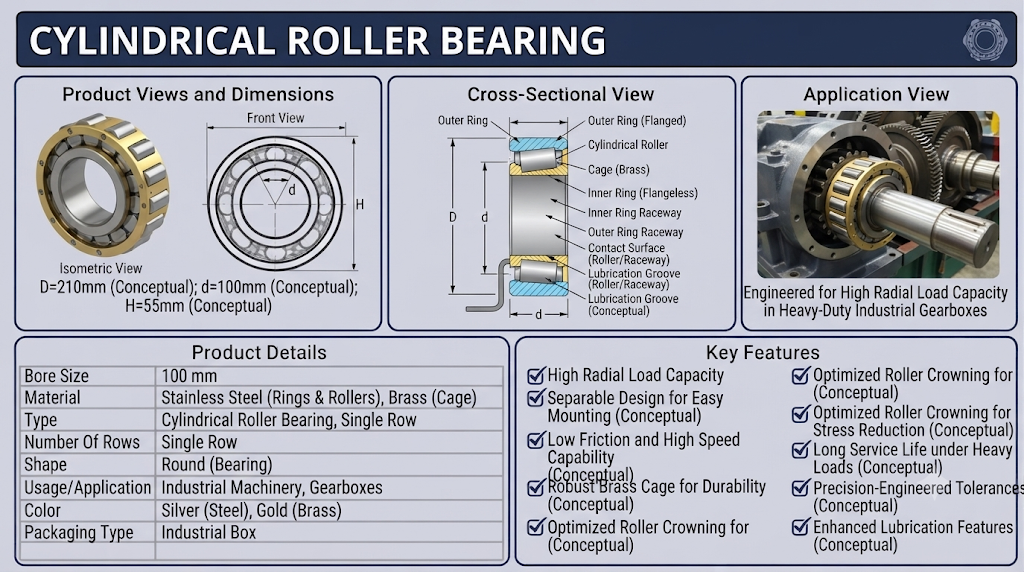
| Bore Size | 100 mm |
|---|---|
| Material | Stainless Steel |
| Type | Roller Bearing |
| Number Of Rows | Single Row |
| Shape | Round |
| Usage/Application | Industrial |
| Color | Silver |
| Packaging Type | Box |
What Is a Cylindrical Roller Bearing?
A cylindrical roller bearing is made to carry heavy radial load — that means load pushing sideways against the shaft, not along it. Instead of round balls, it uses straight, cylinder-shaped rollers placed between the inner and outer ring. Because a roller touches the raceway along a full line rather than a single point, it can spread out the load over a bigger area. This is why cylindrical roller bearings can carry much more weight than a ball bearing of the same size.
This bearing type is used in machines where the load is mostly radial and the speed is often high, such as electric motors, gearboxes, rolling mills, and machine tool spindles. Since the rollers and raceway need to line up closely for smooth rolling, the shaft and housing must be fitted with good alignment. Unlike a self-aligning bearing, a cylindrical roller bearing does not forgive much angular error, so correct fitting and a solid housing bore are important for long life.
Many cylindrical roller bearing designs also allow the inner ring to slide a small amount inside the outer ring along the shaft direction. Engineers call this a floating or non-locating bearing, and it is useful on long shafts that expand slightly when they heat up during running. A second bearing on the same shaft, usually of a locating type, holds the shaft firmly in place from side to side.
Cylindrical Roller Bearing vs Ball Bearing: What Is the Difference?
A ball bearing touches its raceway at a small point, so it suits lighter loads and allows some sliding motion along the shaft. A cylindrical roller bearing touches the raceway along a line, which lets it carry a far heavier radial load without wearing out fast. However, a cylindrical roller bearing usually cannot handle much axial load — that is, load pushing along the length of the shaft — unless it is a flanged or locating design made for that purpose.
Types of Cylindrical Roller Bearings
These heavy-load roller bearings are grouped by how many rows of rollers they use and how the rings are shaped:
- Single Row Cylindrical Roller Bearing (N, NU, NJ, NUP Series): This is the most common type, with one row of rollers between the inner and outer ring. Depending on the flange design, it can be a free type that allows sliding, or a locating type that holds the shaft firmly in one place. It is widely used in motors, pumps, and gearboxes.
- Double Row Cylindrical Roller Bearing: This design has two rows of rollers packed close together, giving very high radial stiffness with a compact size. It is a common choice for machine tool spindles that need high precision and very little shaft movement.
- Full Complement Cylindrical Roller Bearing: Here the bearing is built without a cage, so more rollers fit into the same space. This raises the load capacity even further, though top running speed is usually lower than a caged bearing. It suits slow-moving, very heavy-load equipment like gear reduction units.
- Tapered Bore Cylindrical Roller Bearing: This version has a slightly tapered inner bore instead of a straight one, so it can be fitted onto a tapered shaft seat or adapter sleeve. It makes mounting and removing the bearing easier during maintenance on large machines.
Cylindrical Roller Bearing: Part Numbers, Sizes & Applications
The table below shows common series of cylindrical roller bearings, their usual size range, and where each type is generally used. Share your shaft size and load details with our technical team for an exact match.
| Part Number | Bore (mm) | Outer Dia. (mm) | Width (mm) | Bearing Type | Typical Application |
|---|---|---|---|---|---|
| NU 204 | 20 | 47 | 14 | Single Row Cylindrical Roller Bearing | Electric motor drive-end support |
| NJ 206 | 30 | 62 | 16 | Single Row Cylindrical Roller Bearing | Gearbox input shaft, heavy radial load |
| NUP 2208 | 40 | 80 | 23 | Single Row Cylindrical Roller Bearing (locating type) | Machine tool spindle, axial + radial load |
| N 310 | 50 | 110 | 27 | Single Row Cylindrical Roller Bearing (free type) | Rolling mill shaft, high-speed running |
| NNU 4920 | 100 | 140 | 40 | Double Row Cylindrical Roller Bearing | Machine tool spindle, high precision work |
| NCF 2915 | 75 | 105 | 19 | Full Complement Cylindrical Roller Bearing | Gear reduction unit, maximum load capacity |
Benefits of Choosing the Right Cylindrical Roller Bearing
- Carries Heavy Radial Load: Line contact between roller and raceway spreads out force, helping heavy machinery run reliably in South Africa and Nigeria.
- Runs Well at High Speed: Good heat control and a rigid design keep motors and spindles stable in fast-running lines across Thailand and Indonesia.
- Handles Shaft Growth from Heat: Free-type designs let the shaft expand slightly without extra stress, useful for continuous plants in the UAE and Kuwait.
- Long Service Life Under Load: Correct fitting and lubrication give steady performance for years, cutting downtime for factories in Sri Lanka and Egypt.
- Wide Choice of Series: Single row, double row, and full complement options make it easy to match different load and speed needs.
- Cost-Effective for Heavy Duty: Compared to other bearing types built for the same load, cylindrical roller bearings often give better value per rupee spent.
Where Cylindrical Roller Bearings Are Used Across Our Export Mar
- Sri Lanka: Rubber and tea factory gearboxes use cylindrical roller bearings to handle steady heavy radial load.
- South Africa: Mining conveyor drives and crusher gearboxes rely on heavy-duty cylindrical roller bearings for constant shock load.
- UAE: Building service pumps and large HVAC motors use cylindrical roller bearings to run smoothly at higher speeds.
- Nigeria: Power generation sets and water treatment pumps use cylindrical roller bearings to manage heavy, continuous radial load.
- Egypt: Textile mill spindles and sugar processing gearboxes use cylindrical roller bearings for high-speed, heavy-duty running.
- Indonesia: Palm oil crushing mills and paper machine rollers use cylindrical roller bearings to survive constant heavy pressure.
- Thailand: Rice and sugar mill gearboxes use cylindrical roller bearings where shafts carry high radial force all day.
- Kuwait: Oil and gas plant pumps and compressor shafts use cylindrical roller bearings to handle heat and heavy load together.
- Worldwide: Wherever a machine has a heavy sideways load on the shaft and needs a long, reliable running life, a cylindrical roller bearing is a trusted choice.
How to Select the Right Cylindrical Roller Bearing
- Check the Radial Load: Work out the maximum sideways force on the shaft, since this decides the bearing series and roller size needed.
- Confirm the Speed Range: High running speed calls for good lubrication and sometimes a cage-type bearing instead of full complement.
- Decide Free or Locating Type: Choose a free type where the shaft needs to expand with heat, and a locating type where the shaft must stay fixed in place.
- Plan Lubrication and Sealing: Heavy load and high speed both raise heat, so confirm the right grease or oil method before final selection.
Common Mistakes to Avoid When Choosing a Cylindrical Roller Bearing
- Ignoring Shaft Alignment: This bearing type needs a properly aligned shaft and housing bore, unlike a self-aligning design.
- Mixing Up Free and Locating Types: Fitting the wrong type on the wrong end of the shaft can cause tight running or early roller damage.
- Skipping Fit Tolerance Checks: A loose or too-tight fit on the shaft or housing can lead to noise, heat, or a spinning inner ring.
- Using Too Little Lubricant: Heavy load and high speed both need a steady, correct amount of grease or oil to avoid early wear.
Simple Maintenance Tips for Longer Life
Check the running temperature of the bearing housing regularly, since a sudden rise in heat often points to a lubrication or fit problem. Listen for a smooth, steady sound during normal running — a rumbling or grinding noise usually means roller or raceway damage. Keep to the recommended greasing schedule, and always use clean tools and clean grease when refilling, since dirt is one of the biggest causes of early bearing failure.
Get a fast export quote for heavy-duty cylindrical roller bearings from Shree Balaji Export — reliable delivery to Sri Lanka, South Africa, UAE, Nigeria, Egypt, Indonesia, Thailand, Kuwait and worldwide.
Frequently Asked Questions
It supports a shaft that carries heavy sideways load, often at high speed, in machines like motors, gearboxes, and machine tool spindles.
A ball bearing touches the raceway at a point and suits lighter load, while a cylindrical roller bearing touches along a line and carries much heavier radial load.
Most basic types carry very little axial load. Flanged or locating designs are made to handle a moderate amount of axial load along with the radial load.
Yes. Unlike self-aligning bearings, this type needs the shaft and housing to be lined up correctly for smooth, long-lasting running.
Shree Balaji Export supplies cylindrical roller bearings to Sri Lanka, South Africa, the UAE, Nigeria, Egypt, Indonesia, Thailand, Kuwait, and other markets worldwide, with full export documentation and reliable delivery.
Common signs include unusual noise, a sudden rise in running temperature, visible pitting on the rollers, and grease that looks dark or contaminated during inspection.
 Shree Balaji Exports
Specialize in delivering top-quality bearings and related solutions to meet the diverse needs of various industries.