A clutch release bearing, also called a throw-out bearing, is the part that presses against the clutch pressure plate to disengage the clutch when the driver presses the clutch pedal. It slides on the gearbox input shaft and must spin freely and smoothly under pressure every single time a gear is changed.
A vehicle's clutch gets used hundreds of times a day, and every one of those changes passes through this one small bearing. When it wears out, gear changes turn rough, noisy, or stop working altogether, often stranding a vehicle mid-route. Shree Balaji Export keeps a steady stock of clutch release bearings ready for workshops and fleet operators across Sri Lanka, South Africa, the UAE, Nigeria, Egypt, Indonesia, Thailand, and Kuwait. Send us your vehicle model or existing part number, and our team will confirm the correct fit before dispatch. Browse the full bearing catalogue at Shree Balaji Export.
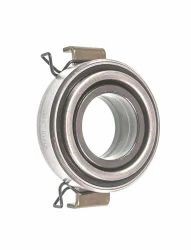
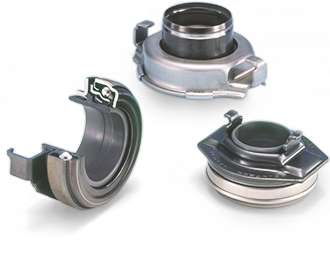
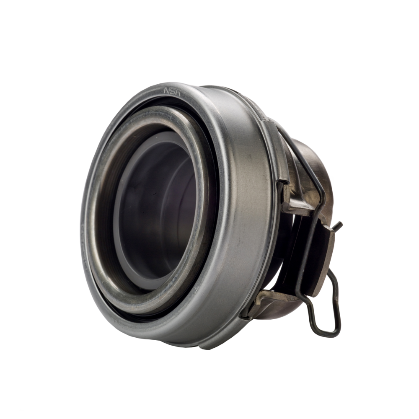
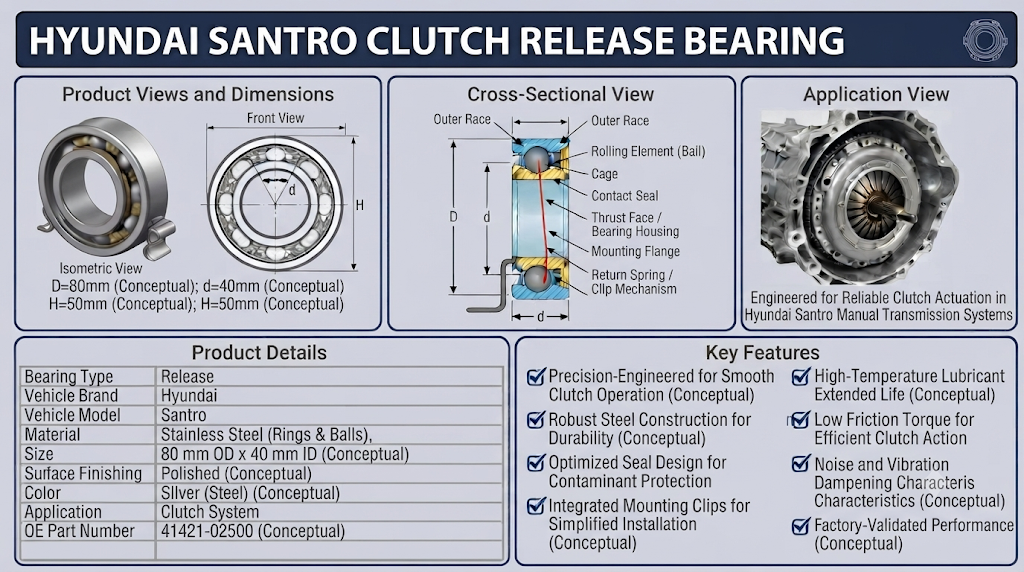
Product Details:
| Bearing Type | Release |
|---|---|
| Vehicle Brand | Hyundai |
| Vehicle Model | Santro |
| Material | Stainless Steel |
| Size | 80 mm |
| Surface Finishing | Polished |
| Color | Silver |
What Is a Clutch Release Bearing?
A clutch release bearing sits between the clutch fork (or the hydraulic slave cylinder) and the spinning pressure plate diaphragm spring. When the driver presses the clutch pedal, this bearing slides forward on the gearbox input shaft and pushes on the spring, which pulls the clutch disc away from the engine's flywheel so the gear can be changed without grinding.
Because one side of this bearing must stay still (fixed to the fork) while the other side spins with the engine, it needs a design that can handle constant sliding, sideways push, and high spinning speed at the same time, unlike a bearing that only supports a shaft turning in one place.
Many newer vehicles now use a hydraulic self-adjusting clutch bearing, often called a Concentric Slave Cylinder or CSC bearing, which combines the release bearing and the hydraulic piston into a single sealed unit fitted directly around the gearbox input shaft.
Clutch Release Bearing vs Standard Bearing: What Is the Difference?
A standard bearing usually spins continuously in one fixed position, such as inside a motor or wheel hub. A clutch release bearing, on the other hand, spends most of its time still and only spins and slides briefly each time the pedal is pressed, so it needs a housing built for repeated sliding movement plus short bursts of high-speed spin, along with grease that can handle both without drying out.
Types of Clutch Release Bearings
Clutch release bearings are grouped by how they mount and operate inside the clutch assembly:
- Ball Type Clutch Release Bearing: The most common and simplest design, using a sealed ball bearing mounted in a sliding sleeve. It is widely used across passenger cars, light commercial vehicles, and farm machinery.
- Self-Centering Release Bearing: Built with a small amount of side play, this bearing can shift slightly to line up perfectly with the pressure plate spring, reducing noise and uneven wear on the clutch fork.
- Hydraulic Self-Adjusting Bearing (CSC): Combines the release bearing with a hydraulic slave cylinder in one sealed unit fitted around the input shaft, common on modern hatchbacks and sedans where cable-operated clutches have been phased out.
- Pull-Type Release Bearing: Instead of pushing the spring forward, this design pulls it back to disengage the clutch, a layout often seen in heavy commercial trucks and buses.
- Push-Type Release Bearing:The traditional layout where the bearing pushes directly on the diaphragm spring, still common in compact cars with a cable or rod-operated clutch.
Clutch Release Bearing: Part Numbers, Sizes & Applications
The table below lists common clutch release bearing types, their typical size range, and where each is generally fitted. Share your vehicle model or the old part number with our team for an exact match.
| Part Number | Bore/ID (mm) | Outer Dia. (mm) | Height (mm) | Bearing Type | Typical Application |
|---|---|---|---|---|---|
| CT52307 | 30 | 52 | 30 | Ball Type Clutch Release Bearing | Light commercial vehicle manual gearbox |
| VKC2244 | 35 | 60 | 34 | Self-Centering Release Bearing | Passenger car manual transmission |
| 614054 | 35 | 62 | 40 | Hydraulic Self-Adjusting Bearing (CSC) | Modern hatchback and sedan clutch system |
| RCT2066SA1 | 20.6 | 52 | 24 | Push-Type Release Bearing | Compact car manual gearbox |
| N4165 | 35 | 65 | 36 | Pull-Type Release Bearing | Heavy commercial truck clutch |
| CT2500 | 25 | 52 | 27 | Ball Type Clutch Release Bearing | Tractor and agricultural machinery clutch |
Benefits of Choosing the Right Clutch Release Bearing
- Smoother Gear Changes: A properly matched bearing keeps clutch engagement quiet and free of grinding.
- Fewer Roadside Breakdowns: A reliable release bearing lowers the risk of sudden clutch failure mid-journey.
- Longer Clutch System Life: Even pressure on the diaphragm spring reduces uneven wear across the whole clutch assembly.
- Handles High-Speed Spin Safely: A bearing rated for the vehicle's engine speed avoids overheating during long drives.
- Fits Without Modification: Correct bore, outer diameter, and height match the original equipment exactly.
- Reduces Repeat Workshop Visits: A quality bearing means fewer comebacks for the same clutch complaint.
Clutch Release Bearing Needs Across Our Export Markets
Engine bay heat and dust levels shift a great deal between our export destinations, and this changes what a clutch release bearing must handle. Workshops in Sri Lanka and Indonesia see heavy monsoon humidity, which calls for a well-sealed bearing so moisture does not creep past the boot and dry out the grease early. Fleets in the UAE and Kuwait push clutch bearings through very high engine bay temperatures, making a high-temperature grease grade essential to stop premature hardening. South Africa and Nigeria run a large share of pickup and light commercial vehicles on dusty rural roads, where a tight-sealed bearing keeps grit away from the sliding sleeve. Egypt and Thailand combine dense city traffic with frequent gear changes, so a bearing rated for constant sliding cycles matters as much as raw load capacity. Across every one of these markets, and for buyers worldwide, matching the bearing type and grease grade to local driving conditions is what keeps a clutch shifting smoothly for the long run.
How to Select the Right Clutch Release Bearing
- Confirm the Clutch Operation Type: Cable, hydraulic push-type, or hydraulic CSC systems each need a different bearing design.
- Match Bore, Outer Diameter, and Height: These dimensions must match the gearbox input shaft and fork exactly.
- Check the Vehicle's Engine Speed Range: Higher-revving engines need a bearing rated for faster spin cycles.
- Consider Local Driving Conditions: Dusty, humid, or hot climates each call for a different seal and grease choice.
Common Mistakes to Avoid When Choosing a Clutch Release Bearing
- Ignoring Noise During Pedal Press: A light chirp or grinding sound often signals a worn bearing that needs attention soon.
- Mixing Bearing Types: Fitting a push-type bearing into a pull-type clutch system will not disengage the clutch correctly.
- Skipping Grease Compatibility: The wrong grease grade can dry out fast in high engine bay heat.
- Reusing a Worn Bearing After a Clutch Kit Change: This often leads to a repeat failure soon after the new clutch is fitted.
Simple Maintenance Tips for Longer Life
Listen for a light chirping or grinding sound whenever the clutch pedal is pressed, since this is usually the first sign of a worn clutch release bearing. Feel for any vibration through the pedal during gear changes, which can point to uneven wear inside the bearing. Always replace the release bearing together with the clutch disc and pressure plate during a clutch job, since the labour to reach it is the same either way, and a fresh bearing avoids a second teardown soon after.
Need genuine clutch release bearings for your workshop or fleet? Get a fast export quote from Shree Balaji Export — trusted delivery to Sri Lanka, South Africa, UAE, Nigeria, Egypt, Indonesia, Thailand, Kuwait, and worldwide.
Frequently Asked Questions
It presses on the clutch pressure plate spring to disengage the clutch every time the driver changes gear, letting the gearbox shift smoothly.
A clutch release bearing is built for repeated sliding movement plus short bursts of high-speed spin, while a normal bearing usually spins continuously in one fixed position.
It often makes a chirping, grinding, or rumbling noise when the clutch pedal is pressed, which usually fades once the pedal is released.
Not quite. A CSC, or Concentric Slave Cylinder, bearing combines a standard release bearing with a hydraulic piston in one sealed unit, while a traditional release bearing works with a separate clutch fork.
Shree Balaji Export supplies clutch release bearings to Sri Lanka, South Africa, the UAE, Nigeria, Egypt, Indonesia, Thailand, Kuwait, and other markets worldwide, with complete export documentation.
There is no fixed mileage, but it is standard workshop practice to replace it together with the clutch disc and pressure plate whenever a clutch job is done.
 Shree Balaji Exports
Specialize in delivering top-quality bearings and related solutions to meet the diverse needs of various industries.