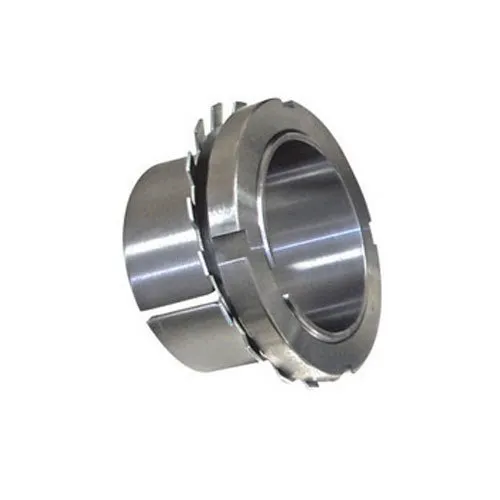
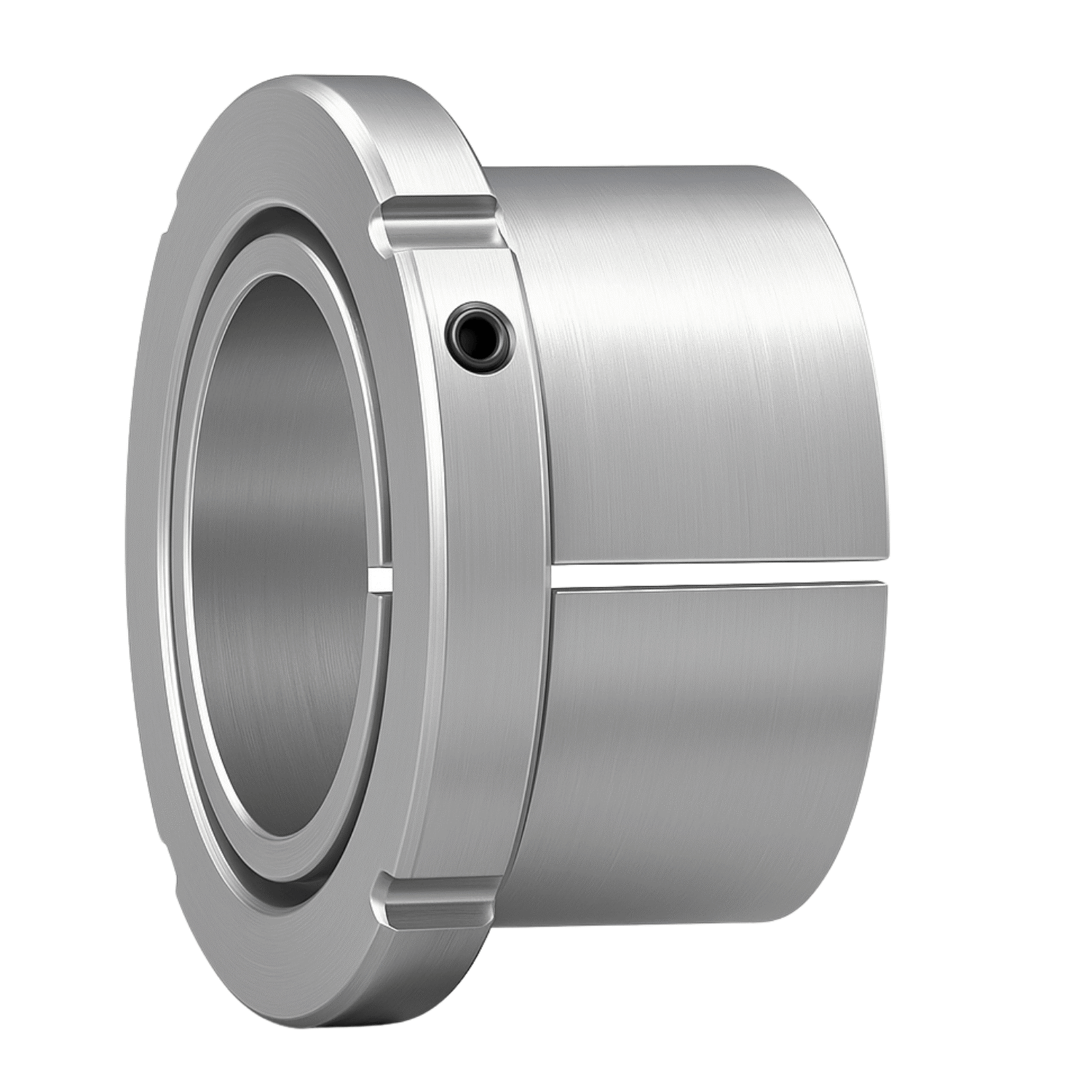
A bearing sleeve is a tapered metal ring fitted between a shaft and a tapered-bore bearing, letting the bearing be mounted or removed from a plain cylindrical shaft without machining a shoulder or step.
Adapter sleeves are used to mount the bearing, while withdrawal sleeves are used to remove it later, and both come in sizes to match common bearing bore diameters.
Fitting a tapered-bore bearing onto a plain shaft, without the right sleeve, is one of the most common ways a bearing gets damaged before it even starts working. At Shree Balaji Export, we supply bearing sleeves matched to the bearing series we ship, so mounting and removal stay simple and safe on-site. Our team checks sleeve size, taper ratio, and lock nut fit before packing each order, with export paperwork ready for smooth customs clearance. Visit Shree Balaji Export to check stock and request a quote.
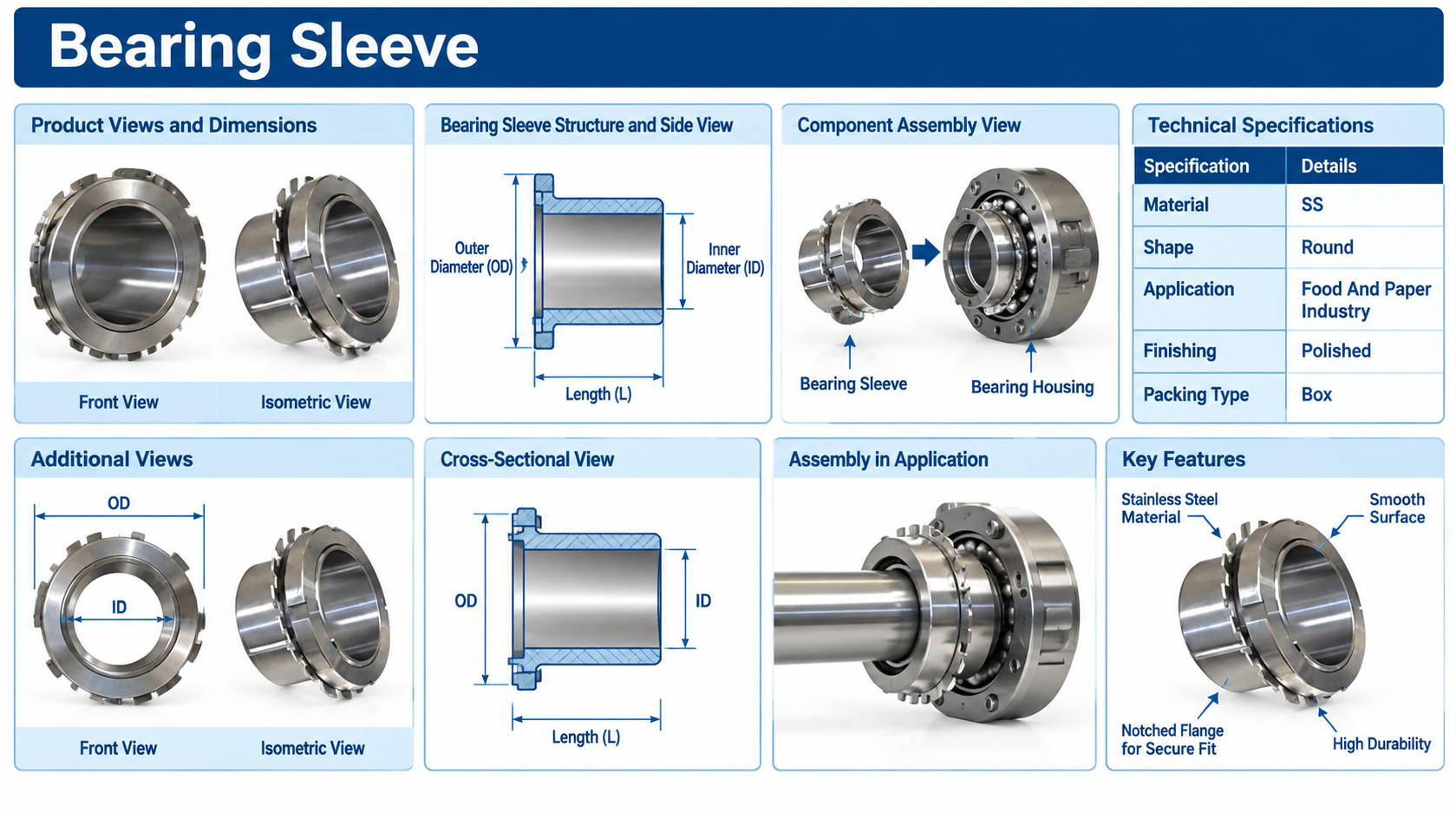
Product details
| Material | SS |
|---|---|
| Shape | Round |
| Application | Food And Paper Industry |
| Finishing | Polished |
| Packing Type | Box |
What Is a Bearing Sleeve?
Some bearings, such as spherical roller bearings, are made with a tapered bore instead of a straight one. This tapered bore cannot sit directly on a plain, straight shaft. A bearing sleeve is a tapered metal ring that fits between the two - it slides onto the shaft, and the bearing is then pushed onto the sleeve, so the taper of the bearing bore and the taper of the sleeve line up and grip together.
This simple part removes the need to machine a shoulder, groove, or step onto the shaft just to hold the bearing in place. A lock nut and lock washer are fitted at the end of the sleeve to keep everything tight and secure once the bearing is in position.
Adapter Sleeve vs Withdrawal Sleeve: What Is the Difference?
An adapter sleeve is used to mount a bearing onto a shaft - it is pushed in from one side, drawing the bearing up the taper until the fit is tight. A withdrawal sleeve does the opposite job: it is used later, during service, to pull a bearing back off the shaft cleanly, without hammering or damaging the shaft surface.
Both sleeve types are matched to a specific bearing bore size and taper ratio, so an adapter sleeve and a withdrawal sleeve are not interchangeable - the right one depends on whether the job is mounting or removing the bearing.
Types of Bearing Sleeves
- Standard Adapter Sleeves (H Series): The most common mounting sleeve, used with spherical roller bearings on plain shafts across pumps, fans, and conveyors.
- Heavy-Duty Adapter Sleeves (H30 / H31 / H32 Series): Sized for large bearings on heavy shafts, used in mills, crushers, and other high-load rotating machinery.
- Short Adapter Sleeves (HE / HS Series): A shorter design that fits where housing space is limited, such as compact pillow block units.
- Withdrawal Sleeves (AH / AOH Series): Used to remove a bearing safely during maintenance. Larger AOH sleeves include oil-injection ducts so oil pressure helps loosen the fit.
Bearing Sleeve Series, Bore Range & Applications
The table below is a general guide to common bearing sleeve series, the bore sizes they typically cover, and where each is used. Share your bearing designation and shaft diameter with our team for an exact match.
| Sleeve Series | Sleeve Function | Typical Bore Range | Typical Application |
|---|---|---|---|
| H2 / H3 Series | Adapter sleeve, straight-through bore | 20 mm - 200 mm | Mounting spherical roller bearings on plain shafts |
| H30 / H31 / H32 Series | Adapter sleeve for larger, heavy bearings | 100 mm - 500 mm | Mill drives, crushers, and heavy rotating equipment |
| HE / HS Series | Short adapter sleeve for tight housings | 20 mm - 200 mm | Pillow block and take-up units with limited space |
| AH2 / AH3 Series | Withdrawal sleeve, matches H2/H3 bearings | 20 mm - 200 mm | Removing a bearing mounted with an H2/H3 sleeve |
| AH30 / AH31 / AH32 Series | Withdrawal sleeve for large bearings | 100 mm - 500 mm | Removing large bearings on mill and crusher shafts |
| AOH Series | Withdrawal sleeve with oil-injection ducts | 200 mm and above | Large bearings needing oil-assisted dismounting |
| Lock Nut & Lock Washer Set | Secures sleeve and bearing on the shaft | Matches sleeve size | Fitted with every adapter or withdrawal sleeve |
Benefits of Using the Right Bearing Sleeve
- No Special Shaft Machining Needed: A plain, straight shaft is enough - no shoulder or step required.
- Easier Mounting and Removal: Sleeves make fitting and later servicing far simpler than a direct interference fit.
- Even Load Distribution: A correctly fitted sleeve helps the bearing grip evenly around the shaft.
- Works on Long or Stepped Shafts: Sleeves can often be fitted at any point along a plain shaft, not just at one fixed spot.
- Lower Maintenance Cost: Withdrawal sleeves reduce the risk of shaft damage when a bearing needs replacing.
Sleeve Use Across Our Export Markets
The type of sleeve in demand often depends on the size of local machinery and how often bearings need servicing. Here is a short look across the countries we export to:
| Export Market | How Bearing Sleeves Support Local Machinery |
|---|---|
| Sri Lanka | Rubber processing rollers use adapter sleeves to fit spherical bearings onto long plain shafts without extra machining. |
| South Africa | Mining crushers and mill drives use heavy H30-series sleeves to carry large bearings under constant vibration. |
| UAE | Port and material handling cranes use sleeves that allow bearings to be swapped quickly during scheduled shutdowns. |
| Nigeria | Cement and aggregate plants fit adapter sleeves so bearings can be mounted on-site without precision shaft grinding. |
| Egypt | Sugar and food processing mills use sleeve-mounted bearings on long line shafts that run continuously in season. |
| Indonesia | Palm oil crushing and pressing equipment uses adapter sleeves to simplify bearing changes during plant maintenance. |
| Thailand | Paper and pulp machinery uses sleeve-mounted bearings on rollers that need periodic, straightforward servicing. |
| Kuwait | Oil and gas pumping stations use withdrawal sleeves so bearings can be removed safely during turnaround maintenance. |
| Worldwide | Any plain, unmachined shaft that needs a bearing mounted or removed without special tooling is a fit for sleeve-mounted bearings. |
How to Choose the Right Bearing Sleeve
- Match the Bearing Bore and Taper: The sleeve must fit the exact bore size and taper ratio of the bearing being mounted.
- Check the Shaft Diameter: The sleeve's inner diameter must match the plain shaft it will sit on.
- Decide Mounting or Removal Need: Choose an adapter sleeve for fitting, a withdrawal sleeve for later removal.
- Consider the Housing Space: A short HE/HS-type sleeve may be needed where clearance around the bearing is tight.
Common Mistakes to Avoid
- Over-Tightening the Lock Nut: This can reduce the bearing's internal clearance too much and shorten its life.
- Mixing Sleeve and Bearing Sizes: A sleeve must match the exact bearing series it is meant for.
- Skipping the Clearance Check: Bearing clearance should be checked during fitting, not assumed correct by feel.
- Reusing a Worn Withdrawal Sleeve: A sleeve that has been over-tightened or damaged may not seat correctly next time.
Simple Maintenance Tips for Longer Service Life
Check the lock nut and lock washer for correct, even tightness during routine service, since a loose fit can let the bearing shift on the shaft. Keep the sleeve and shaft surface clean and lightly lubricated before mounting, as this helps the bearing draw up evenly during fitting. Store spare sleeves in a dry place, since surface rust can make later mounting or removal far more difficult.
Need adapter or withdrawal sleeves matched to your bearings?Get a fast export quote from Shree Balaji Export - trusted delivery to Sri Lanka, South Africa, UAE, Nigeria, Egypt, Indonesia, Thailand, Kuwait, and worldwide.
Frequently Asked Questions
It is used to mount a tapered-bore bearing onto a plain, straight shaft, or to remove that bearing later, without needing to machine a shoulder onto the shaft.
An adapter sleeve is used to mount a bearing onto a shaft, while a withdrawal sleeve is used later to remove that bearing safely during maintenance.
Yes. A lock nut and lock washer are fitted with the sleeve to keep the bearing tight and correctly positioned on the shaft.
No. A sleeve is matched to a specific bearing bore size and taper ratio, so it should only be used with the bearing series it is designed for.
Shree Balaji Export supplies bearing sleeves to Sri Lanka, South Africa, the UAE, Nigeria, Egypt, Indonesia, Thailand, Kuwait, and other markets worldwide, with complete export documentation.
Common signs include a loose fit after tightening, visible rust or pitting on the sleeve surface, and difficulty achieving correct bearing clearance during mounting.
 Shree Balaji Exports
Specialize in delivering top-quality bearings and related solutions to meet the diverse needs of various industries.