A propeller shaft bearing, often called a center support bearing or drive shaft bearing, is the part that holds the middle of a long propeller shaft in place while letting it spin freely. It carries the weight of the shaft, keeps it in line between the gearbox and the rear axle, and absorbs the vibration that builds up as the shaft turns at high speed.
In rear-wheel-drive and four-wheel-drive vehicles, power from the gearbox reaches the wheels through this spinning shaft, and the bearing supports it on every single trip. When it wears out, drivers feel vibration, hear a humming or clunking sound, and in serious cases the shaft can sag or whip. Shree Balaji Export keeps a steady stock of propeller shaft bearings ready for workshops and fleet operators across Sri Lanka, South Africa, the UAE, Nigeria, Egypt, Indonesia, Thailand, and Kuwait. Send us your vehicle model or existing part number, and our team will confirm the correct fit before dispatch. Browse the full bearing catalogue at Shree Balaji Export.
Product Details:
| Bearing Type | Center Support |
|---|---|
| Vehicle Brand | Toyota |
| Vehicle Model | Hilux |
| Material | Chrome Steel with Rubber Mount |
| Size | 30 mm |
| Surface Finishing | Black Coated |
| Color | Black |
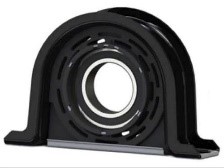
A propshaft bearing, also known as a center support or carrier bearing, is a rubber-mounted bearing that supports the middle of a two-piece Center Bearing in a Propeller Shaft on rear-wheel-drive and four-wheel-drive vehicles.
What Is a Propeller Shaft Bearing?
A propeller shaft bearing sits inside a rubber-cushioned bracket that is bolted to the vehicle underbody. The bearing holds the shaft at its midpoint, so a long shaft can be split into two shorter sections joined by a universal joint. This keeps the shaft straight and balanced instead of letting it bend under its own weight at speed.
The rubber mount around the bearing does a second job: it soaks up small movements and vibration from the engine and the road, so they are not passed into the cabin. Because the shaft spins thousands of times a minute while the vehicle body moves up and down, the bearing must handle high speed, sideways push, and constant small shifts in alignment at the same time.
Many propeller shafts also use needle roller bearings inside the universal joints at each end. These are separate from the center support bearing, and both parts should be checked together when diagnosing driveline noise or vibration.
Propeller Shaft Bearing vs Standard Bearing: What Is the Difference?
A standard bearing is usually fitted in a fixed housing, such as a wheel hub or a motor, and supports a shaft with very little movement around it. A propeller shaft bearing, on the other hand, sits in a flexible rubber bracket, spins at high driveline speed, and must tolerate small angle changes as the suspension moves, so it needs good sealing, strong grease, and a mount that can flex without cracking.
Types of Propeller Shaft Bearings
- Center Support Bearing (Rubber Mounted): The most common type. A sealed ball bearing is held inside a rubber ring and metal bracket under the vehicle, supporting the middle of a two-piece propeller shaft in pickups, SUVs, vans, and light trucks.
- Sealed Deep Groove Ball Bearing: A standard sealed ball bearing used as the rolling part inside many center support assemblies. It is simple, quiet, and widely available in the common 62 and 63 series sizes.
- Double Row Center Support Bearing: Uses two rows of balls for extra load capacity and steadier support, often fitted on heavier vehicles and long-wheelbase commercial chassis.
- Universal Joint Needle Roller Bearing: Small needle roller cups fitted at the cross of each universal joint. They let the shaft turn smoothly while the joint changes angle, and are found at both ends of most propeller shafts.
- Flanged or Bracket-Type Support Bearing: Comes with a metal flange or housing already attached, so it can be bolted directly onto the crossmember. It is common in trucks, buses, and agricultural vehicles.
Propeller Shaft Bearing: Part Numbers, Sizes & Applications
The table below lists common sealed bearing sizes used in propeller shaft center supports, with their dimensions and where each is generally fitted. Complete center support assemblies include a rubber mount and bracket, so share your vehicle model or the old part number with our team for an exact match.
| Part Number | Bore/ID (mm) | Outer Dia. (mm) | Width (mm) | Bearing Type | Typical Application |
|---|---|---|---|---|---|
| 6203-2RS | 17 | 40 | 12 | Sealed Deep Groove Ball Bearing | Compact car center support |
| 6205-2RS | 25 | 52 | 15 | Sealed Deep Groove Ball Bearing | Passenger car and SUV center support |
| 6206-2RS | 30 | 62 | 16 | Sealed Deep Groove Ball Bearing | Pickup and light commercial vehicle center support |
| 6207-2RS | 35 | 72 | 17 | Sealed Deep Groove Ball Bearing | Heavy pickup and van center support |
| 6306-2RS | 30 | 72 | 19 | Sealed Deep Groove Ball Bearing | Truck and bus center support |
Benefits of Choosing the Right Propeller Shaft Bearing
- Less Vibration: A well-matched bearing keeps the shaft balanced, so the cabin stays smooth at highway speed.
- Quieter Drive: Proper sealing and good grease reduce humming and clunking from under the vehicle.
- Longer Driveline Life: Steady support reduces strain on the universal joints, gearbox output seal, and differential.
- Fewer Roadside Breakdowns: A reliable bearing lowers the risk of shaft damage or failure during long journeys.
- Fits Without Modification: Correct bore, outer diameter, and width match the original equipment exactly.
- Reduces Repeat Workshop Visits: A quality bearing means fewer comebacks for the same vibration complaint.
Propeller Shaft Bearing Needs Across Our Export Markets
Road conditions and climate vary a great deal between our export destinations, and this changes what a propeller shaft bearing must handle. Workshops in Sri Lanka and Indonesia see heavy monsoon humidity and standing water, which calls for a well-sealed bearing and a rubber mount that resists moisture. Fleets in the UAE and Kuwait run through very high underbody temperatures, so heat-resistant grease and a rubber compound that does not harden early are essential. South Africa and Nigeria use a large share of pickups and light commercial vehicles on dusty and uneven rural roads, where a tight-sealed bearing keeps grit out and a strong mount handles constant shaking. Egypt and Thailand combine dense city traffic with long highway runs, so a bearing that stays quiet at both low and high shaft speeds matters as much as load capacity. Across every one of these markets, and for buyers worldwide, matching the bearing size, seal type, and mount quality to local driving conditions is what keeps a driveline running smoothly for the long run.
How to Select the Right Propeller Shaft Bearing
- Check the Running Speed: High shaft speed generally points toward this bearing over a plain axial deep groove type.
- Confirm Load Direction: Decide if load pushes one way only or if a two-direction matched pair is required.
- Estimate Any Side Load: A small amount of radial load is fine here, but heavy side load still needs a dedicated radial bearing.
- Decide on Sealed or Open Design: Pick sealed for easier upkeep, or open where a custom lubrication system already exists.
Common Mistakes to Avoid When Choosing a Propeller Shaft Bearing
- Ignoring Vibration at Speed: A shake or hum that grows with vehicle speed often signals a worn bearing that needs attention soon.
- Replacing Only the Bearing and Not the Rubber Mount: A cracked or soft rubber mount lets the shaft sag and will wear out a new bearing quickly.
- Skipping Grease and Seal Quality: A poor seal lets in water and dust, and the bearing dries out fast.
- Forgetting the Universal Joints: Worn universal joints cause the same vibration and can damage a new center bearing.
Simple Maintenance Tips for Longer Life
Listen for a humming, growling, or clunking sound from under the vehicle, especially when you speed up or let off the accelerator, since this is usually the first sign of a worn propeller shaft bearing. Feel for vibration through the floor or seat that grows with speed. During every service, look at the rubber mount for cracks or tearing, and check the universal joints for play. When a center support bearing is replaced, inspect the shaft balance and the joints at the same time, since a fresh bearing in a worn driveline will not last long.
Need genuine propeller shaft bearings for your workshop or fleet? Get a fast export quote from Shree Balaji Export — trusted delivery to Sri Lanka, South Africa, UAE, Nigeria, Egypt, Indonesia, Thailand, Kuwait, and worldwide.
Frequently Asked Questions
It supports the middle of the propeller shaft, keeping it straight and balanced while it spins and reducing vibration between the gearbox and the rear axle.
A propeller shaft bearing sits in a flexible rubber mount and handles high driveline speed and small alignment changes, while a normal bearing is usually fitted in a fixed housing.
It often makes a humming, growling, or clunking noise from under the vehicle, and may cause vibration that gets stronger as speed increases.
In most cases, yes. The center support bearing is the bearing that holds the middle of the shaft, and many people use both names for the same part.
Shree Balaji Export supplies propeller shaft bearings to Sri Lanka, South Africa, the UAE, Nigeria, Egypt, Indonesia, Thailand, Kuwait, and other markets worldwide, with complete export documentation.
There is no fixed mileage. Replace it when you notice noise, vibration, or play in the shaft, and always check the rubber mount and universal joints at the same time.
 Shree Balaji Exports
Specialize in delivering top-quality bearings and related solutions to meet the diverse needs of various industries.