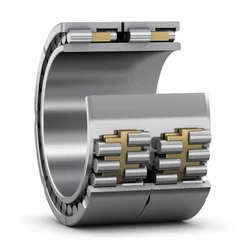
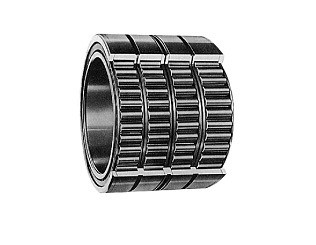
A four-row cylindrical roller bearing is a heavy-duty bearing built with four rows of rollers to carry very high radial loads in a short axial space. It is mainly used to support the rolls of rolling mills and other heavy machinery.
Shree Balaji Export supplies four-row cylindrical roller bearings and other heavy-duty precision bearings to steel plants, mill builders, and industrial distributors across Sri Lanka, South Africa, the UAE, Nigeria, Egypt, Indonesia, Thailand, and Kuwait. Each bearing is checked for correct rolling accuracy and load rating before dispatch, and our export team manages packing, documentation, and freight so heavy bearings arrive safely and on schedule at your site.
Product Specification
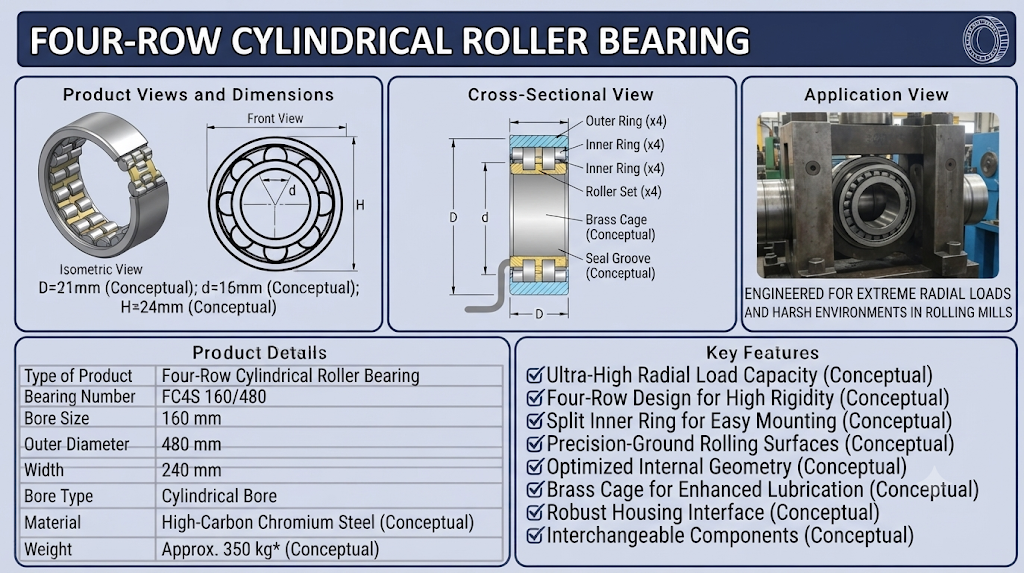
| Bore Size | 160 mm |
|---|---|
| Type | Roller Bearing |
| Material | Stainless Steel |
| Shape | Round |
| Packaging Type | Box |
| Surface Finishing | Polished |
| Usage/Application | Industrial |
What Is a Four-Row Cylindrical Roller Bearing?
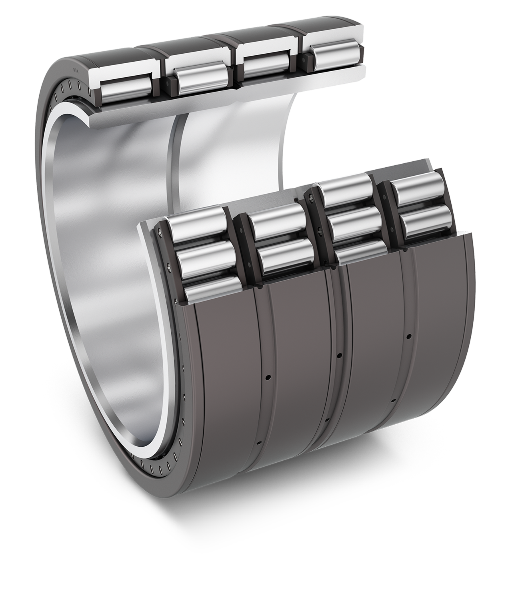
A four-row cylindrical roller bearing is a large bearing made of two double-row bearing units placed side by side, giving four full rows of cylindrical rollers in total. Cylindrical rollers touch the raceway along a line instead of a single point, so they can carry much heavier radial load than ball bearings of the same size. Because it packs four rows into one short bearing, it can support very heavy shafts and rolls without taking up too much space along the shaft.
How It Differs from a Standard Cylindrical Roller Bearing
A standard cylindrical roller bearing usually has one or two rows of rollers and is used for general shaft support. A four-row cylindrical roller bearing is built specifically for extreme radial load in a compact width, which is why it is almost always found supporting the rolls inside rolling mills, presses, and other heavy machines rather than in general motors or fans.
Design Features of a Four-Row Cylindrical Roller Bearing
- Four full rows of cylindrical rollers arranged in two matched double-row sets, spreading the load evenly across the whole bearing width.
- Separable design in most sizes — the inner ring, outer ring, and roller-and-cage assembly can be fitted separately, which makes mounting on large mill rolls easier.
- Machined brass or steel cage that keeps every roller correctly spaced, so the load stays even across all four rows even under shock loading.
- Available with or without ribs on the inner or outer ring, depending on whether the application also needs some axial (side-to-side) guidance.
- Made from case-hardened or through-hardened bearing steel to resist the constant heavy pounding found in rolling mill service.
Four-Row Cylindrical Roller Bearing: Part Numbers, Sizes & Applications
The table below shows common four-row cylindrical roller bearing sizes and where each size is typically used. Exact part numbers and dimensions can be matched to your machine drawing or existing bearing by our technical team.
| Part Number | Bore (mm) | Outer Dia. (mm) | Width (mm) | Typical Application |
|---|---|---|---|---|
| FC 2436120 | 120 | 180 | 120 | Small backup rolls, light rolling stands |
| FC 3652130 | 180 | 260 | 130 | Cold rolling mill work rolls |
| FC 4058190 | 200 | 290 | 190 | Hot rolling mill backup rolls |
| FC 5478210 | 270 | 390 | 210 | Wire rod mill roll necks |
| FC 6496240 | 320 | 480 | 240 | Plate mill backup rolls |
| FC 74110290 | 370 | 550 | 290 | Heavy plate / continuous casting rolls |
Benefits of a Quality Four-Row Cylindrical Roller Bearing
-
1. Very High Radial Load Capacity: Four rows of rollers share the load, so the bearing can support the enormous forces of rolling and pressing without needing a wider shaft. This is valuable for steel and metal plants across South Africa and Egypt.
2. Compact Axial Width: Because the load capacity comes from extra rows rather than extra width, mill housings across Nigeria and Indonesia can stay compact while still handling heavy tonnage.
3. Good Stiffness Under Shock Load: Rolling mills often apply sudden, uneven force as metal enters the rolls. A four-row design resists this shock better than a single-row bearing, reducing damage risk in plants across Thailand and the UAE.
4. Long Service Life with Proper Lubrication: With correct oil or grease lubrication and regular inspection, these bearings can run for years under continuous heavy duty, lowering total cost of ownership for mills in Kuwait and Sri Lanka.
5. Easier Maintenance with Separable Design: Because the rings and roller sets can often be removed separately, maintenance teams can inspect, clean, and re-lubricate the bearing without needing to dismantle the entire roll assembly.
Where Four-Row Cylindrical Roller Bearings Are Used
These bearings are built for one main purpose: supporting heavy rotating rolls and shafts under extreme load. Common uses include:
- Steel and Metal Rolling Mills: Hot and cold rolling mills across South Africa, Egypt, and Indonesia use four-row cylindrical roller bearings on backup rolls and work rolls, where they must survive constant heavy pressure while keeping the rolled metal within a tight thickness tolerance.
- Continuous Casting Machines: In continuous casting lines used by metal producers in the UAE and Nigeria, these bearings support the guide rolls that carry red-hot steel slabs, where high load capacity and heat resistance both matter.
- Heavy Presses and Forging Equipment: Forging and pressing plants across Thailand and Kuwait use four-row cylindrical roller bearings in the main press rolls and drive shafts, where the bearing must absorb repeated, powerful impact loads.
- Paper and Rubber Calendering Machines: Paper mills and rubber processing plants across Sri Lanka and Indonesia use these bearings in calender rolls, which press and smooth material under very high, constant roller pressure.
Selecting and Maintaining Your Bearing
-
1. Match the Exact Bore and Load Rating: Always confirm shaft bore size and the expected radial load before ordering, since an undersized bearing will fail quickly under mill conditions.
2. Use the Correct Lubricant: Heavy-duty mineral or synthetic bearing grease rated for high load and, where relevant, high temperature should be used and topped up on the manufacturer's schedule.
3. Watch for Early Warning Signs: Unusual vibration, a rise in operating temperature, or metal particles in the used grease are early signs of wear and should trigger an inspection before a full failure happens.
4. Store and Handle with Care: These bearings are heavy and precise. Store them horizontally in original packaging and use proper lifting equipment during mounting to avoid damaging the rollers or raceways.
Request an export quote for four-row cylindrical roller bearings from Shree Balaji Export — trusted heavy-duty supply to Sri Lanka, South Africa, UAE, Nigeria, Egypt, Indonesia, Thailand, and Kuwait.
Frequently Asked Questions
It is mainly used to support heavy rotating rolls in rolling mills, continuous casting machines, presses, and calendering equipment, where the load is too high for a standard single or double-row bearing.
A double-row bearing has two rows of rollers, while a four-row bearing combines two double-row units into one, doubling the number of load-carrying rows for even higher radial load capacity in a similar width.
Four-row cylindrical roller bearings are commonly made with bore sizes from about 120 mm to well over 500 mm, since they are designed for large industrial rolls and shafts. Exact sizes depend on the mill or machine design.
Yes. Because they carry very high loads at moderate speed, they need a heavy-duty grease or oil rated for high pressure, applied and refreshed on a strict maintenance schedule to prevent premature wear.
Shree Balaji Export supplies four-row cylindrical roller bearings and other heavy-duty bearings to Sri Lanka, South Africa, the UAE, Nigeria, Egypt, Indonesia, Thailand, Kuwait, and other markets, with export documentation and freight handled for every order.
Common signs include rising vibration or noise at the roll neck, uneven wear on the rolled product, higher-than-normal bearing temperature, and visible pitting or discolouration on rollers found during routine inspection.
 Shree Balaji Exports
Specialize in delivering top-quality bearings and related solutions to meet the diverse needs of various industries.