Steering Bearing helps the steering system move smoothly and makes turning easier and more stable. It is commonly used in <>cars, trucks, two-wheelers, and other vehicles.
Shree Balaji Export is a trusted manufacturer, supplier, and exporter of steering bearings and a comprehensive range of industrial bearing products, with well-established export routes to Sri Lanka, South Africa, the UAE, Nigeria, Egypt, Indonesia, Thailand, Kuwait, and worldwide markets. With deep technical knowledge, accurate OEM cross-referencing across all major vehicle brands, and a dependable export-ready supply chain, Shree Balaji Export serves the full spectrum of industries that rely on steering bearings — from heavy road freight and agriculture to port logistics and industrial machinery. Quality, consistency, and expertise — delivered globally.
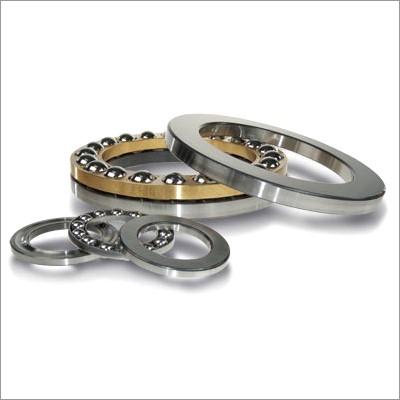
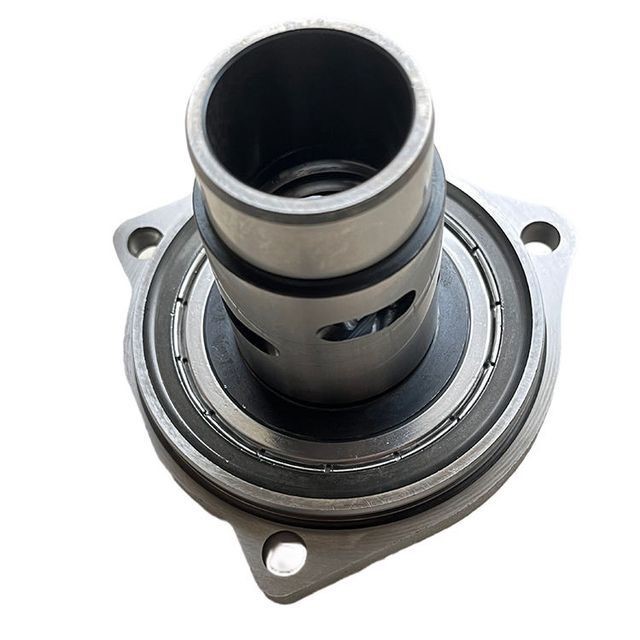
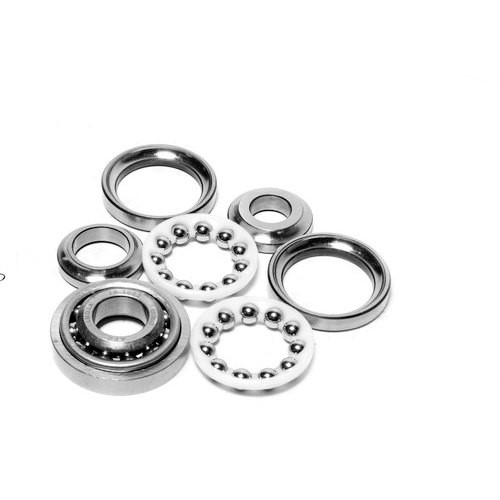
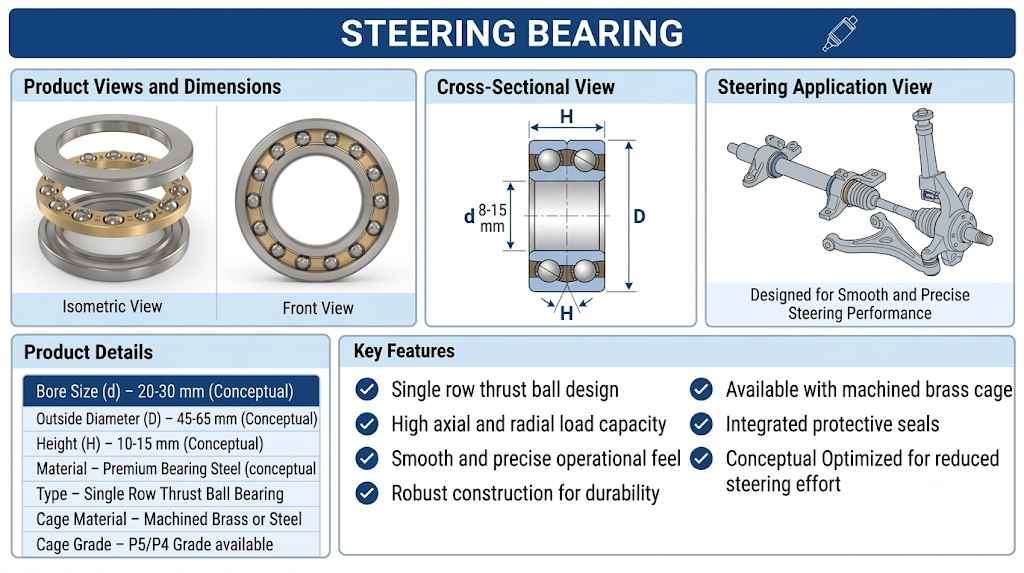
Product Specifications
| Precision Rating | P6 |
|---|---|
| Inside Diameter | 80 mm |
| Retainer | Yes |
| Thickness | 30 mm |
| Cage Material | Steel |
| Bearing Type | Steering Bearing |
| Material | Stainless Steel |
| Number Of Rows | Single Row |
| Bore Size | 80 mm |
| Outside Diameter | 200 mm |
What Is a Steering Bearing?
A steering bearing is a part that helps the steering system of a car or machine work. Its main job is to make sure the steering column and wheels can turn easily without much friction. The steering bearing also has to handle the forces that come from the weight of the car bumps in the road and turning.
When you turn the steering wheel of a car it makes the front wheels turn. The steering bearing helps make this happen smoothly so you do not have to use much effort. If the steering bearing is not working properly it can be hard to steer the car. The tires can wear out faster. In cases the steering can even fail, which is a big safety risk.
There are kinds of steering bearings each made for a specific part of the steering system. They can be small like the bearings inside the steering column or like the bearings that support the front axle of a heavy truck. Each type of bearing has to be made to exact specifications. It can affect how the car handles and how safe it is.
Types of Steering Bearings & Sizes
Steering bearings are chosen based on how force they have to handle the shape of the steering system and where the car or machine will be used. Here are the main kinds of steering bearings:
-
a) Angular Contact Ball Bearings: These are the common kind of steering bearing used in cars and light trucks. They are made to handle forces that come from the side and from the front. They are usually used in pairs to make sure the steering is smooth. Common sizes include 7205, 7206, 7207, 7208 and 7210.
b) King Pin Bearings: These bearings support the king pin, which's the pin that the front wheels of a heavy truck or bus turn around. They have to handle heavy forces and can withstand shocks from bumps in the road. There are two kinds of king pin bearings: roller bearings and needle roller bearings. Common sizes include T 188 S, T 194 S and T 194 TR.
c) Taper Roller Steering Bearings: These bearings are used in trucks and buses and they support the front axle. They have to handle the weight of the vehicle and the forces that come from turning. Common sizes include 32207, 32208, 32210, 32212 and 32214. d) Thrust Bearings: These bearings handle forces that come from the front or back. They are used in the steering column and king pin assembly. Common sizes include 51105, 51106, 51108 and 51110.
e) Spherical Plain Bearings: These bearings are used in the steering linkage and they help the parts move smoothly as the suspension travels up and down. They come in sizes, like GE 20 TXE, GE 25 TXE, GE 30 TXE and GE 40 TXE.
f) Deep Groove Ball Bearings: These bearings are used in power steering systems. They support the pump that helps the steering. They have to handle forces that come from the side. They have to be quiet and need little maintenance. Common sizes include 6205, 6206, 6207 and 6208.
Quick Reference: Steering Bearing Types & Common Sizes
| Bearing Number | Type | Dimensions (mm) | Steering Application |
|---|---|---|---|
| 7207 | Angular Contact Ball | 35 × 72 × 17 | Steering column |
| T 194 S | King Pin Thrust | Heavy Duty series | Truck kingpin |
| 32210 | Tapered Roller | 50 × 90 × 23 | Front axle knuckle |
| 51108 | Ball Thrust | 40 × 60 × 13 | Column thrust point |
| GE 30 TXE | Spherical Plain | 30 × 47 × 22 | Tie rod / drag link |
| 6207-2RS | Deep Groove Ball | 35 × 72 × 17 | Power steering pump |
Benefits of Using Steering Bearings
When you buy quality steering bearings from a trustworthy supplier you get a lot of benefits that you can actually see and measure no matter what kind of vehicle you have or what industry you are in:
- Steering is Precise and Easy: Good steering bearings make sure that the steering system works smoothly and that the driver does not have to use a lot of effort to turn the wheels. This means that the vehicle will respond quickly and predictably to the drivers input, which reduces the drivers fatigue on trips.
- Enhanced Vehicle Safety: If the steering bearing fails the driver can suddenly lose control of the vehicle, which's very dangerous. If you have high-quality steering bearings that are made correctly, you can be sure that the steering system will stay stable and easy to control for a long time.
- Extended Tyre Life: If the steering bearings are worn out or not set up correctly the tyres will not be aligned properly which means they will wear out faster. This can increase the cost of operating the vehicle.
- Reduced Driver Fatigue: When the steering is smooth and easy the driver does not have to use much physical and mental effort to control the vehicle, which is especially important on long trips in places like Nigeria, South Africa and Southeast Asia where drivers have to drive for many hours at a time.
- Lower Overall Maintenance Cost: Although good quality steering bearings may cost more at first they last longer than cheaper ones. If a steering bearing fails soon it can damage other parts of the vehicle like the king pins, steering knuckles and tie rod ends which can make the repair bill much higher.
- Improved Handling in Challenging Conditions: Whether you are driving on sandy roads in the UAE wet ports in Sri Lanka or heavily loaded mining roads in South Africa good quality steering bearings will always work well even in extreme temperatures, when the vehicle is contaminated or when it is heavily loaded.
- The Specifications Match the Original Equipment: Steering bearings from suppliers like Shree Balaji Export are made to match the original equipments dimensions and load ratings which means they will fit correctly and last as long as expected from the moment they are installed.
Industry Applications of Steering Bearings
The steering bearing is an important part that is used in almost every vehicle and machine that has a steered axle, rotating platform or articulated chassis. Here are the main industries that Shree Balaji Export supplies:
- Heavy Commercial Vehicles and Road Freight: Long-haul trucks, tippers and tankers that drive on roads in Nigeria, South Africa and Indonesia have to use their front axle steering knuckles and king pin bearings a lot, which means they need high-quality steering bearings. King pin thrust bearings and front axle tapered roller steering bearings are the popular steering bearing products that Shree Balaji Export exports to these markets.
- Bus and Coach Transport: Buses and coaches in Egypt, Thailand and the UAE have to stop and start a lot and change lanes frequently which means their steering bearings get used a lot. The steering column angular contact bearings and kingpin bearings on the front axles of these vehicles need to be strong and reliable to keep the passengers safe and comfortable.
- Agriculture and Farm Equipment: Tractors, combine harvesters and self-propelled sprayers in Indonesia and Thailand have to drive on uneven fields, which can be tough on the front axle steering knuckles. The king pin bearings and tapered roller steering bearings on these machines need to be able to handle mud, crop debris and water.
- Construction and Mining Equipment: Articulated dump trucks, graders, wheel loaders and excavators that work on construction and mining sites in Kuwait, UAE and South Africa use steering bearings in their articulated chassis pivot points and wheel knuckles. These bearings have to be able to absorb shocks and vibrations while keeping the vehicle stable.
- Port and Terminal Equipment: Reach stackers, terminal tractors and heavy forklifts that work in ports like Colombo Port in Sri Lanka and Port Said in Egypt have to steer under loads often in tight spaces. Their steering knuckle bearings and king pin assemblies need to be able to handle operation with minimal maintenance.
- Industrial Machinery and Crane Slew Rings: Big angular contact ball bearings and thrust roller bearings are used as steering or slewing elements in cranes, tower cranes and rotating industrial platforms in manufacturing facilities, in Thailand and Indonesia. These bearings have to support the weight of the platform while allowing smooth controlled rotation.
Conclusion
The steering bearing is one of the most safety-critical components in any vehicle or machine that steers, pivots, or rotates under load. From the angular contact ball bearings inside a passenger car's steering column, to the heavy-duty king pin thrust bearings on a 60-tonne articulated truck traversing African highways — every steering bearing position is a point where quality directly determines safety, performance, and operating cost.
For fleet operators, maintenance workshops, and parts distributors across Asia, Africa, and the Middle East, choosing the right steering bearing from a reliable, knowledgeable supplier is not a minor procurement decision. It is a fundamental part of keeping vehicles safe and operational.
Get steering bearings for commercial vehicles, automotive applications, replacement needs, and bulk export orders. Share your requirements with our team and get competitive pricing for worldwide supply.
Frequently Asked Questions
The most common warning signs of a worn steering bearing include increased steering effort (the wheel becomes noticeably heavier to turn), vague or imprecise steering feel, a clicking or grinding noise when turning the wheel, excessive play or looseness in the steering wheel, and uneven or rapid tyre wear. On heavy vehicles, visual inspection of king pin bearings during routine maintenance — checking for play by lifting the front wheel and applying lateral force — is a reliable detection method. Any of these symptoms warrant immediate inspection, as steering bearing failure represents a serious road safety risk.
A king pin bearing is a large, heavy-duty bearing — typically a thrust type or tapered roller — that supports the king pin in a heavy truck or bus front axle. The king pin is the vertical pivot around which the front wheels steer, and its bearings must carry the full front axle weight plus lateral steering forces. A steering column bearing, by contrast, is a smaller angular contact ball bearing that supports the steering shaft connecting the steering wheel to the steering gear or rack. Both are called steering bearings but serve very different positions, load levels, and vehicle types.
No. Standard deep groove ball bearings and angular contact ball bearings may share the same bore and outer diameter in some sizes, but they are not interchangeable in steering applications. Angular contact bearings are specifically designed to handle the combination of radial and axial loads present in steering columns and knuckles, with their internal geometry optimised for this purpose. A standard ball bearing used in an angular contact position will have incorrect load sharing characteristics and will fail prematurely — potentially at a safety-critical moment. Always replace with the correct bearing type as specified for the application.
Shree Balaji Export currently exports steering bearings and industrial bearing products to Sri Lanka, South Africa, the United Arab Emirates, Nigeria, Egypt, Indonesia, Thailand, Kuwait, and markets worldwide. The company supports both large wholesale orders for distributors and specific sourcing requirements for individual workshops or fleet operators. Export documentation, competitive pricing, and reliable delivery across all active supply routes are standard parts of the service offering.
Correct installation is critical for steering bearing performance and longevity. Key principles include: always use the appropriate bearing press or fitting tool rather than hammering directly on the bearing (impact on the races damages the internal geometry), and apply force only to the ring being pressed — inner ring when pressing onto a shaft, outer ring when pressing into a housing. For paired angular contact bearings, ensure correct preload as specified by the vehicle manufacturer. After installation, verify that there is no perceptible play in the steering, and road-test to confirm smooth, consistent steering response before returning the vehicle to service.
 Shree Balaji Exports
Specialize in delivering top-quality bearings and related solutions to meet the diverse needs of various industries.