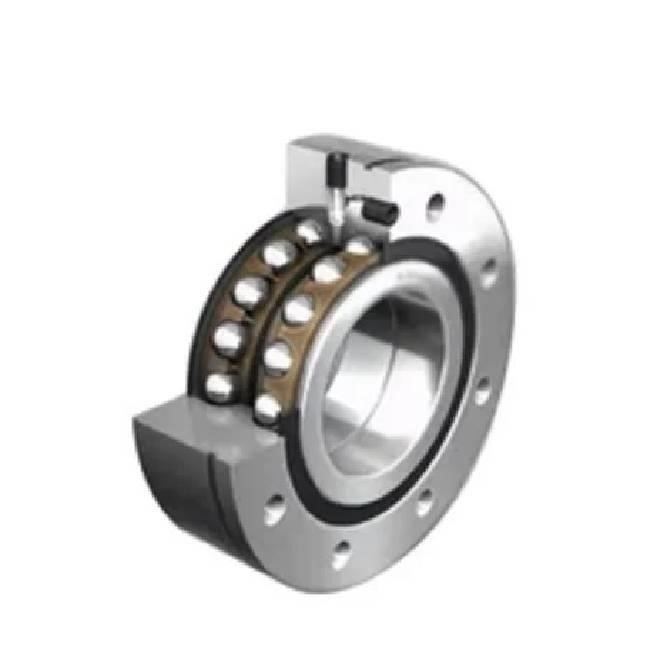
A ball screw bearing is a special bearing made to support the ball screw shaft used in CNC machines and linear motion systems. It holds the shaft firmly, carries both end push and side load, and lets the screw turn smoothly with very little play.
Shree Balaji Export manufactures and exports precision linear motion support bearings and other bearing products to industrial buyers across Sri Lanka, South Africa, the UAE, Nigeria, Egypt, Indonesia, Thailand, and Kuwait. Every unit is checked for smooth rotation and correct preload before dispatch, and our export team handles packing, paperwork, and shipping so your order reaches you complete and on time.
Product Specifications
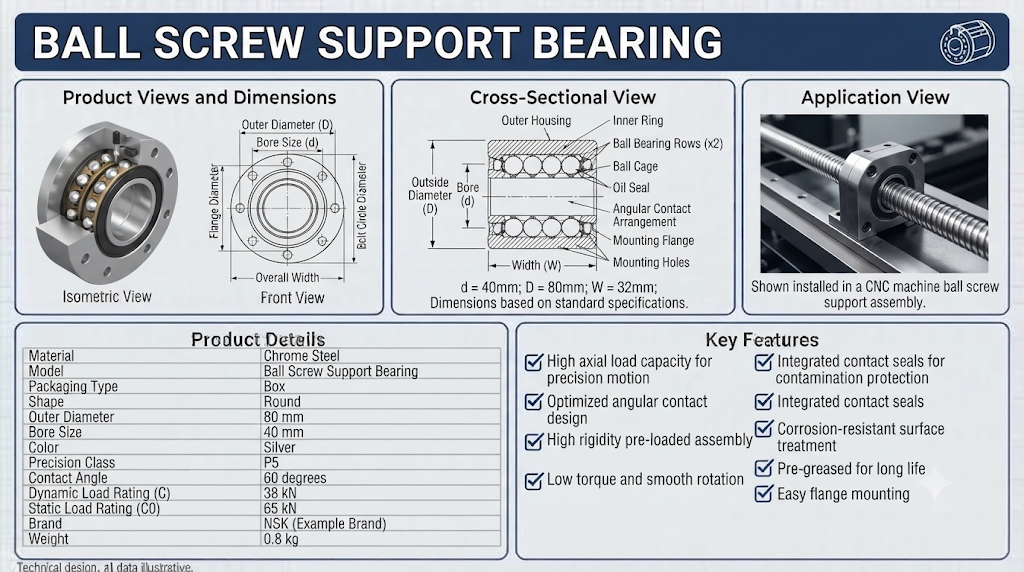
| Material | Chrome Steel |
|---|---|
| Model | Ball Screw Support Bearing |
| Packaging Type | Box |
| Shape | Round |
| Outer Diameter | 80 mm |
| Bore Size | 40 mm |
| Color | Silver |
What Is a Ball Screw Bearing?
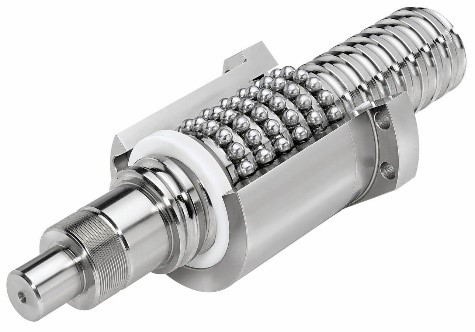
It is a support bearing made to work with a ball screw. A ball screw is a long threaded rod that turns a nut to create straight-line (linear) motion. This is the moving part found inside CNC machines, 3D printers, and factory robots. This support bearing sits at the end of the shaft and holds it steady while it spins, so the machine moves smoothly and stays accurate over long hours of work.
Unlike a normal ball bearing, this kind of shaft support bearing must handle push from both directions along the shaft, plus a small amount of side load. This mixed job is why it is built with a special angled ball path, known as angular contact, which simply means the balls touch the raceway at a slight angle instead of straight on. This angle lets it grip the shaft firmly and stop unwanted back-and-forth play.
A full ball screw assembly usually has three main parts: the threaded shaft, the travelling nut, and the support units at each end that let the shaft spin freely. In motion control systems, these support units are just as important as the screw itself, because even a tiny amount of play at the ends can throw off the accuracy of the whole linear guide setup. Machine builders often check catalogue terms such as preload class, contact angle, and axial rigidity before finalising a part number, since these values decide how the assembly will behave under real working load.
Ball Screw Bearing vs Normal Ball Bearing: What Is the Difference?
A normal deep groove ball bearing mainly holds a shaft from the side and takes very little end push. A precision linear motion bearing like this one is built differently — it takes end push very well, holds a small side load too, and keeps almost zero looseness in the shaft. This is why such support bearings are also called precision motion bearings, and they are almost always used in pairs or sets so the shaft cannot move even a fraction of a millimetre out of place.
Types of Ball Screw Bearings
These support bearings are grouped by how they are arranged on the shaft, since the arrangement decides how much load and accuracy the setup can offer:
- Single Angular Contact Type: This is one unit bearing with an angled ball path. It supports load from one direction strongly and is often used at the free end of a short screw.
- Duplex Set (Two Matched Bearings): Two matched units are mounted face to face or back to back. This pair setup removes play from both directions and is common in CNC machine tool feed axes.
- Triplex Set (Three Matched Bearings): Three matched units work together for very heavy load and extra rigidity. These sets are used in large grinding machines and heavy presses where accuracy under load really matters.
- Fixed-End and Support-End Arrangement: In many machines, one end of the ball screw uses a fixed-end unit (carries full load and locates the shaft) while the other end uses a simple support bearing (just keeps the shaft steady). Choosing the right combination gives smooth motion and a longer machine life.
Ball Screw Bearing: Part Numbers, Sizes & Applications
The table below shows common series of these precision shaft support bearings, their typical size range, and where each type is generally used. Share your shaft size and machine details with our technical team for an exact match.
| Part Number | Bore (mm) | Outer Dia. (mm) | Height (mm) | Bearing Type | Typical Application |
|---|---|---|---|---|---|
| BK 12 | 12 | 32 | 10 | Angular Contact Ball Screw Bearing | CNC machine ball screw end support |
| BK 15 | 15 | 35 | 11 | Angular Contact Ball Screw Bearing | Small linear actuator screw support |
| 30TAC62B | 30 | 62 | 15 | Duplex Angular Contact Ball Screw Bearing | Machine tool feed screw support |
| 40TAC90B | 40 | 90 | 20 | Duplex Angular Contact Ball Screw Bearing | Heavy-duty CNC lathe ball screw |
| BF 20 | 20 | 47 | 14 | Fixed-End Ball Screw Support Bearing | Robotic arm linear axis |
| 3506 | 30 | 62 | 15 | Triplex Ball Screw Bearing Set | High-precision grinding machine feed |
Benefits of Choosing the Right Support Bearing
- High Precision, Low Play: A quality unit keeps backlash to a minimum, which helps CNC machine builders in South Africa and Egypt hold tight tolerances.
- Handles Load From Both Sides: The angled ball design carries push from either direction, useful for reversing linear axes used across Indonesia and Thailand.
- Smooth, Low-Friction Motion: Rolling ball contact reduces friction and heat, keeping fast-moving CNC spindles and printers running cool in the UAE and Kuwait.
- Long Working Life: With correct preload and lubrication, ball screw bearings run for years without losing accuracy, cutting downtime for factories in Nigeria and Sri Lanka.
- Easy Replacement: Standard part-number series make it simple to match a replacement bearing set, even on older or imported machines.
- Better Positioning Accuracy: Reduced play along the shaft means the machine tool or robotic arm stops exactly where the program tells it to, run after run.
- Lower Vibration and Noise: A properly preloaded support unit rolls more evenly, which cuts down vibration and keeps nearby sensors and controllers working reliably.
Where These Precision Bearings Are Used Across Our Export Markets
- Sri Lanka: Textile and packaging machines use these precision shaft bearings in their automatic cutting and positioning axes for accurate, repeatable movement.
- South Africa: Mining equipment control systems and CNC job shops rely on this bearing type to keep drilling and milling heads exactly on position.
- UAE: Precision workshops and 3D printing setups use linear motion support bearings for smooth, accurate travel in hot working conditions.
- Nigeria: Local fabrication units and small CNC router machines use them to guide cutting tools along a straight, steady path.
- Egypt: Textile machinery and packaging lines fit these support bearings in their feed and positioning systems for consistent product sizing.
- Indonesia: Furniture and woodworking CNC machines use them to keep carving and cutting heads accurate over long production runs.
- Thailand: Electronics assembly lines and pick-and-place machines depend on this bearing type for fast, precise, repeatable movement.
- Kuwait: Oil and gas workshop equipment and maintenance tool rooms use them in CNC lathes and milling machines for accurate repairs.
- Worldwide: Wherever a machine needs to turn rotation into a straight, accurate movement, a correctly chosen support bearing keeps that motion smooth and long-lasting.
Buyers often ask our team for guidance before placing an order, and that is completely normal — matching bore size, preload class, and arrangement correctly the first time saves both cost and downtime later. Sending a simple sketch or the old part number from the machine nameplate is usually enough for our engineers to confirm the right replacement or a suitable equivalent from a different make.
How to Select the Right Support Bearing for Your Machine
- Check the Load Direction: Find out if your ball screw mainly faces end push, side load, or both, since this decides single, duplex, or triplex arrangement.
- Measure Bore, Outer Diameter, and Height: These three sizes, taken from the shaft and housing, are needed to match the correct ball screw bearing series.
- Decide Fixed-End or Support-End: Confirm which end of the ball screw needs full load support and which end just needs steady guidance.
- Plan the Preload and Lubrication: Correct preload removes play, and steady lubrication keeps friction low, so confirm both before final selection.
Common Mistakes to Avoid When Choosing a Support Bearing
- Ignoring Preload Class: Picking a unit with the wrong preload can leave the shaft loose or, at the other extreme, running too hot under normal load.
- Guessing the Load Direction: Machines that push and pull the shaft in both directions need a duplex or triplex arrangement, not a single unit meant for one-way load.
- Skipping Housing Fit Checks: The outer diameter must match the housing bore closely, or the whole assembly can shift slightly during operation and reduce accuracy.
- Delaying Lubrication Schedules: Waiting too long between greasing intervals is one of the most common causes of early wear and unexpected downtime.
Simple Maintenance Tips for Longer Life
Keep the housing area clean and free of metal dust, since fine particles can work their way into the raceway and cause premature wear. Follow the machine maker's greasing schedule closely, and use only the grease grade recommended for high-speed or heavy-load duty, whichever applies to your setup. Listen for any change in running sound during routine checks — a sudden hum, click, or grinding noise is often the earliest sign that a unit needs attention before it fails completely and stops the production line.
Get a fast export quote for precision linear motion support bearings from Shree Balaji Export — reliable delivery to Sri Lanka, South Africa, UAE, Nigeria, Egypt, Indonesia, Thailand, Kuwait and worldwide.
Frequently Asked Questions
It supports the shaft of a ball screw in CNC machines, 3D printers, and linear motion systems, carrying both end push and side load while keeping the shaft accurate as it turns.
It uses an angled ball path to hold the shaft firmly with almost no play, while a normal ball bearing mainly supports side load and is not built for precise linear motion.
A duplex or triplex set removes leftover play from the shaft and adds rigidity, which keeps the machine accurate even under heavy cutting or pressing load.
Yes. Regular grease or oil lubrication reduces friction, controls heat, and helps it keep its accuracy over a long working life.
Shree Balaji Export supplies ball screw bearings and other precision bearing products to Sri Lanka, South Africa, the UAE, Nigeria, Egypt, Indonesia, Thailand, Kuwait, and other markets worldwide, with full export documentation and reliable delivery.
Common signs include unusual noise during motion, visible looseness or play in the shaft, loss of positioning accuracy, and grease leakage found during routine inspection.
Preload is a small, controlled amount of internal pressure built into the unit at the factory. It removes empty space between the balls and the raceway, which is what gives the shaft its precise, wobble-free motion.
Yes, when sized correctly. High-speed applications usually need a lighter preload class and extra attention to cooling and lubrication compared to slow, heavy-load setups.
 Shree Balaji Exports
Specialize in delivering top-quality bearings and related solutions to meet the diverse needs of various industries.