A radial insert ball bearing is a deep groove ball bearing built with a wider inner ring that locks directly onto a shaft, usually with a set screw, an eccentric collar, or an adapter sleeve. It is normally fitted inside a pillow block, flange, or take-up housing, and is common in conveyors, fans, agricultural machines, and general power transmission shafts.
Keeping the locking method tight and the raceway clearance correct is what our team pays closest attention to when finishing radial insert ball bearings at Shree Balaji Export, since a loose lock or wrong clearance shows up quickly as shaft slip or early wear. Every batch is checked for locking torque, radial play, and seal fit before packing, with export paperwork prepared alongside each shipment. We supply these bearings to customers in Sri Lanka, South Africa, the UAE, Nigeria, Egypt, Indonesia, Thailand, and Kuwait, among other export markets. Visit Shree Balaji Export to see our full range and request a quotation.
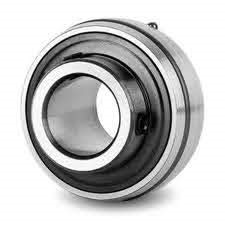
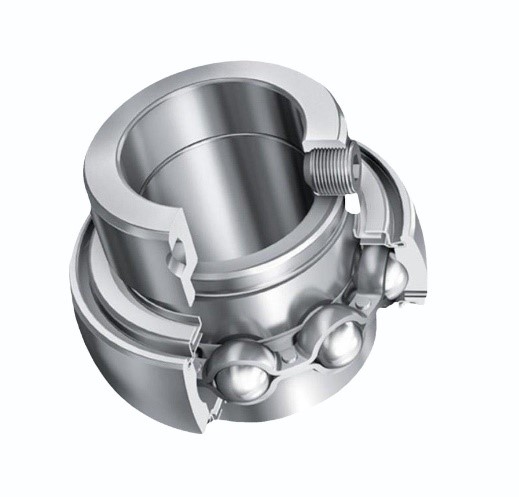
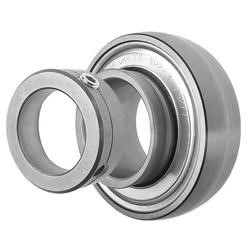
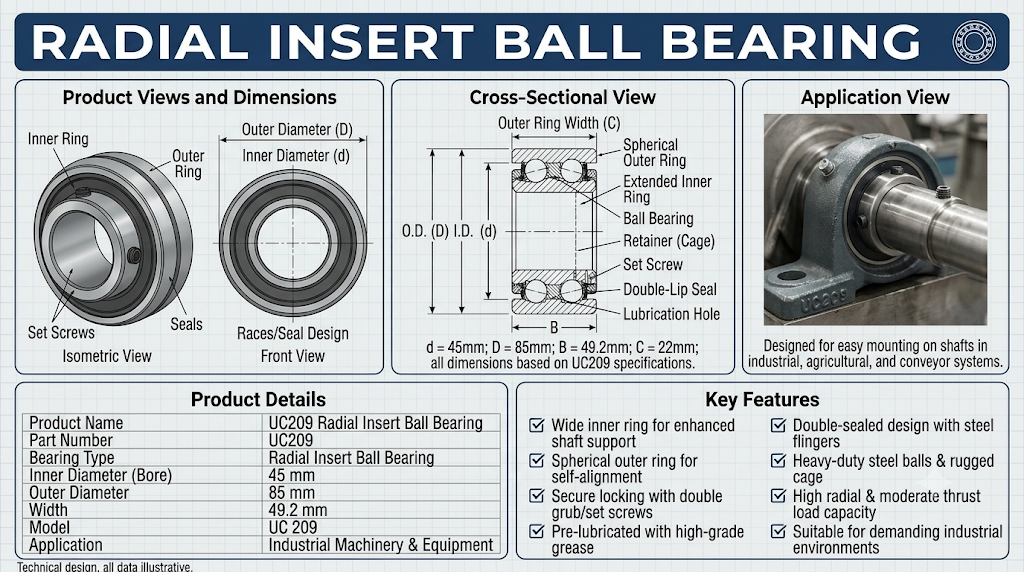
Product Specification
| Product Name | UC209 Radial Insert Ball Bearing |
|---|---|
| Part Number | UC209 |
| Bearing Type | Radial Insert Ball Bearing |
| Inner Diameter (Bore) | 45 mm |
| Outer Diameter | 85 mm |
| Width | 49.2 mm |
| Model | UC 209 |
| Application | Industrial Machinery & Equipment |
What Is a Radial Insert Ball Bearing?
A radial insert ball bearing looks much like a standard deep groove ball bearing, except its inner ring is wider than the outer ring and sticks out on one or both sides. This extra width gives room for a locking method, such as a set screw or collar, so the bearing can grip a plain shaft directly without needing a separate sleeve or shoulder machined into the shaft.
Because it locks straight onto the shaft, a radial insert ball bearing is almost always fitted inside a separate housing, such as a pillow block, flange unit, or take-up frame, rather than being pressed into a machined bore on its own. This combination of bearing housing makes fitting, alignment, and replacement much faster on the factory floor.
Most radial insert ball bearings also come with a spherical outer surface where they seat inside the housing, which allows a small amount of self-alignment if the shaft is not perfectly straight.
Radial Insert Ball Bearing vs Standard Deep Groove Ball Bearing: What Is the Difference?
A standard deep groove ball bearing has inner and outer rings of roughly equal width and needs a shoulder or sleeve on the shaft to stay in place, along with a separate housing bore machined to a tight tolerance. A radial insert ball bearing solves this by widening the inner ring and adding its own locking method, so it can grip a plain, uncut shaft directly.
If a machine already has precisely machined shaft steps and housings, a standard bearing works well. If the goal is fast fitting, easy alignment, and simple replacement on site, especially on general-purpose machinery, a radial insert ball bearing in a pillow block or flange housing is usually the more practical choice.Types of Radial Insert Ball Bearings
- Set Screw Locking Type: Two or more small screws pass through the extended inner ring and press onto the shaft, giving a simple, low-cost way to lock the bearing in place.
- Eccentric Locking Collar Type: A collar with an off-centre hole is turned against the direction of shaft rotation to wedge itself tight, giving a strong grip that resists loosening under vibration.
- Adapter Sleeve Mounting Type: A tapered sleeve is drawn up between the bearing bore and the shaft, allowing the bearing to be mounted anywhere along a plain shaft and easily repositioned.
- Self-Aligning Insert Type: Built with a spherical outer surface that seats inside a matching housing, this type allows for slight shaft misalignment without adding load to the rollers or balls.
Radial Insert Ball Bearing: Part Numbers, Sizes & Applications
The table below lists common radial insert ball bearing types, their general size range, and where each is typically fitted. Share your shaft size and locking preference with our technical team for an exact match.
| Part Number | Bore (mm) | Outer Dia. (mm) | Width (mm) | Bearing Type | Typical Application |
|---|---|---|---|---|---|
| UC 204 | 20 | 47 | 31 | Set screw locking insert bearing | Light-duty pillow block on packaging line |
| UC 208 | 40 | 80 | 39.7 | Set screw locking insert bearing | Grain handling conveyor shaft support |
| UK 210 + H2310 | 45 | 90 | 43 | Adapter sleeve mounting insert bearing | Elevator and mixer shaft alignment |
| SB 206 | 30 | 62 | 38.1 | Eccentric locking collar insert bearing | Fan and blower shaft support |
| UEL 205 | 25 | 52 | 34 | Flanged, set screw locking insert bearing | Compact frame-mounted shaft support |
| 1207 K + H207 | 30 | 72 | 30 | Self-aligning insert ball bearing | Conveyor drive shaft with slight misalignment |
Benefits of Choosing the Right Radial Insert Ball Bearing
- Quick, Tool-Light Fitting: Locks straight onto a plain shaft without needing a machined shoulder or sleeve.
- Easy Alignment: The spherical outer surface allows a small amount of self-alignment inside its housing.
- Fast Replacement: Housing and bearing can be swapped quickly, cutting machine downtime during service.
- Wide Range of Locking Methods: Set screw, eccentric collar, or adapter sleeve options suit different shaft and vibration conditions.
- Good for General-Purpose Machinery: A dependable, low-cost choice for conveyors, fans, and agricultural equipment.
- Sealed Options Available: Sealed and shielded versions help keep out dust and moisture in rough working conditions.
Radial Insert Ball Bearings Across Our Export Markets
Farming, food processing, and general machinery needs differ from market to market, which shapes how radial insert ball bearings are put to work in each country. Here is a short, market-by-market look:
| Export Market | How Radial Insert Ball Bearings Are Used There |
|---|---|
| Sri Lanka | Coconut fibre and desiccated coconut processing lines use pillow block bearing units on their conveyor and sifting rollers. |
| South Africa | Agricultural equipment makers fit these bearing units on threshers, planters, and grain-handling conveyor shafts. |
| UAE | HVAC and cooling tower fan systems use flanged insert bearings for smooth, low-maintenance shaft support. |
| Nigeria | Cassava and grain milling plants use pillow block insert bearings on their processing and conveyor lines. |
| Egypt | Cotton ginning and spinning machines use insert bearings with locking collars for quick shaft alignment and changeover. |
| Indonesia | Sawmill and timber processing conveyors use insert ball bearing units that can handle dust and continuous running. |
| Thailand | Rice milling and sugar processing plants use insert bearing units on their conveyor and bucket elevator systems. |
| Kuwait | Water treatment and desalination plants use insert ball bearings on pump, agitator, and screen shafts. |
| Worldwide | Any low to medium speed shaft mounted in a pillow block, flange, or take-up housing is a strong fit for this bearing type. |
How to Select the Right Radial Insert Ball Bearing
- Confirm the Shaft Diameter: Match the bearing bore size to the shaft it will be locked onto.
- Choose a Locking Method: Pick set screw for simple duty, eccentric collar for vibration resistance, or adapter sleeve for easy repositioning.
- Check for Misalignment: A self-aligning, spherical outer type helps where the shaft may not run perfectly straight.
- Decide on Sealing Needs: Dusty or wet environments usually call for sealed or shielded versions.
Common Mistakes to Avoid When Choosing a Radial Insert Ball Bearing
- Under-Tightening the Locking Screws: A loose set screw allows the inner ring to slip on the shaft over time.
- Ignoring Shaft Runout: Excess shaft misalignment can shorten bearing life even with a self-aligning type fitted.
- Mismatched Housing and Bearing: The outer spherical diameter must match the housing seat for proper self-alignment to work.
- Skipping Regular Re-Lubrication: Open, non-sealed types need scheduled greasing to avoid early wear in dusty conditions.
Simple Maintenance Tips for Longer Life
Check locking screws or collars for tightness on a regular schedule, since a loose lock is often the first sign of trouble in a radial insert ball bearing. Follow the recommended greasing interval for open types, and inspect seals on sealed types for damage or wear. Listen for any new noise or roughness while the shaft turns, as this can point to contamination or early bearing wear.
Request a fast export quote for radial insert ball bearings from Shree Balaji Export — dependable delivery to Sri Lanka, South Africa, UAE, Nigeria, Egypt, Indonesia, Thailand, Kuwait and worldwide.
Frequently Asked Questions
It is used to support a rotating shaft inside a pillow block, flange, or take-up housing, and is common in conveyors, fans, agricultural machines, and general power transmission equipment.
A standard ball bearing needs a machined shaft shoulder or sleeve to stay in place, while a radial insert ball bearing has a wider inner ring with its own locking method, so it can grip a plain shaft directly.
An eccentric locking collar type generally resists loosening from vibration better than a simple set screw type, making it a common choice for shaking or vibrating equipment.
Yes, most radial insert ball bearings have a spherical outer surface that seats inside a matching housing, allowing a small amount of self-alignment without adding extra load to the rolling elements.
Shree Balaji Export supplies radial insert ball bearings to Sri Lanka, South Africa, the UAE, Nigeria, Egypt, Indonesia, Thailand, Kuwait, and other markets worldwide, with complete export documentation and dependable delivery.
Common signs include a loose or slipping inner ring, unusual noise or heat during rotation, and visible wear or damage to the seal or locking collar.
 Shree Balaji Exports
Specialize in delivering top-quality bearings and related solutions to meet the diverse needs of various industries.