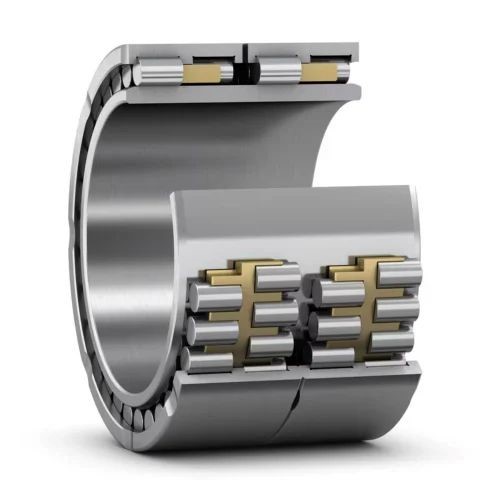
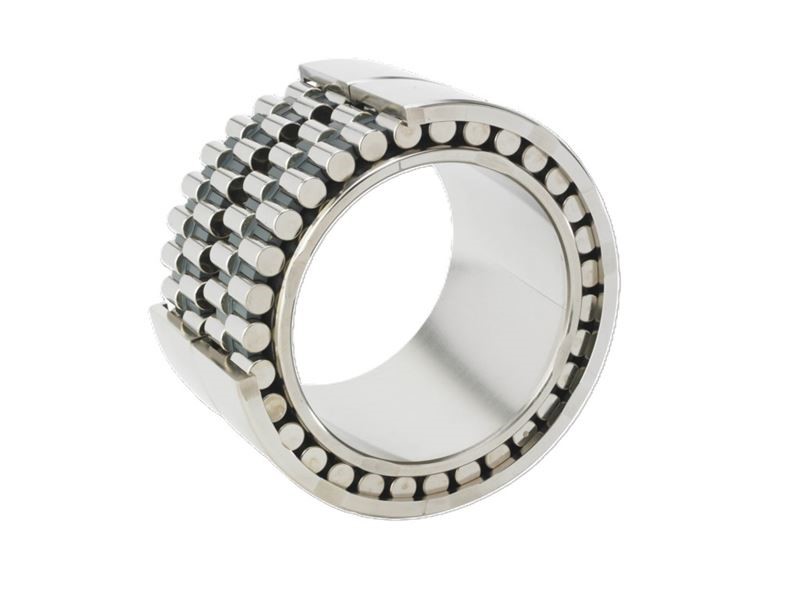
A Timken four row bearing is a heavy-duty tapered roller bearing with four rows of tapered rollers, built to carry very high radial and thrust load together. It is mainly fitted on the roll necks of rolling mills, where it must handle both heavy weight and sideways force at the same time.
Shree Balaji Export supplies four row tapered roller bearings, built and cross-referenced to the same sizes as a Timken four row bearing, to steel mills and industrial buyers across Sri Lanka, South Africa, the UAE, Nigeria, Egypt, Indonesia, Thailand, and Kuwait. Our technical team can match your existing roll neck bearing by bore size, load rating, or drawing number, and our export desk handles packing, documentation, and freight so a heavy mill bearing reaches your plant safely and on time.
Product Specification
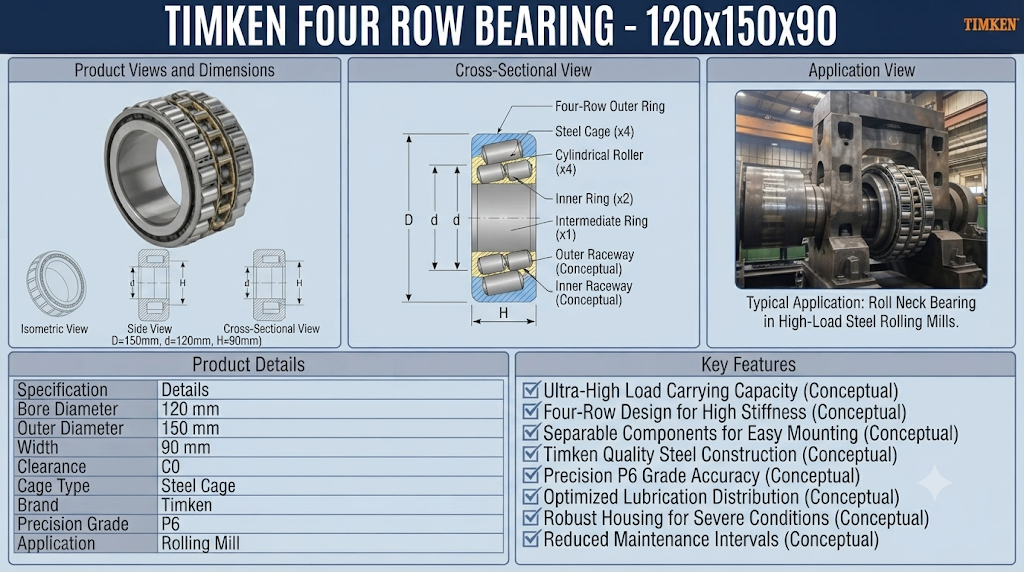
| Bore Diameter | 120 mm |
|---|---|
| Outer Diameter | 150 mm |
| Width | 90 mm |
| Clearance | C0 |
| Cage Type | Steel Cage |
| Brand | Timken |
| Precision Grade | P6 |
| Application | Rolling Mill |
What Is a Timken Four Row Bearing?
A Timken four row bearing is a rolling mill bearing made of four rows of tapered rollers set inside one bearing assembly. Unlike a straight cylindrical roller, a tapered roller is shaped like a cone. This cone shape lets the bearing carry heavy radial load (weight pressing down) and thrust load (side-to-side push) at the same time — something a simple cylindrical roller bearing cannot do as well. This bearing type is often called a TQO bearing (Tapered Quad Outer), and it is the standard choice for supporting the roll necks of steel rolling mills.
Timken Four Row Bearing vs Four Row Cylindrical Roller Bearing
Both bearing types are designed for heavy-duty applications and high radial loads, but their roller geometry and load-handling capabilities differ. A Timken Four Row Bearing uses tapered rollers that can handle both radial and thrust loads, while a four row cylindrical roller bearing primarily handles radial loads with high radial load capacity. This makes four row tapered roller bearings suitable for applications such as rolling mills where combined radial and axial loads need to be managed.
Key Features of a Timken Four Row Bearing
- Four rows of tapered rollers arranged as two matched double-row cartridges, sharing heavy combined radial and thrust load evenly.
- A separable cup (outer ring) and cone (inner ring) design, which allows easier fitting and removal on large rolling mill roll necks.
- Case-hardened, fine-grain bearing steel construction to resist the constant pounding and shock load found in hot and cold rolling mills.
- Precision-machined cage that keeps every tapered roller correctly spaced under heavy duty, continuous running conditions.
- Sealed or open designs available, matched to whether the mill uses oil-bath, grease, or circulating oil lubrication.
Timken Four Row Bearing: Sizes, Part Reference & Applications
The table below lists common four row tapered roller bearing sizes used across rolling mill equipment, along with the typical mill application for each size. Share your bore size, chock drawing, or old bearing part number, and our team will confirm the exact cross-reference for your machine.
| Bore (mm) | Outer Dia. (mm) | Width (mm) | Common Type Ref. | Typical Application |
|---|---|---|---|---|
| 180 | 260 | 130 | TQO 180x260x130 | Cold rolling mill work roll neck |
| 220 | 310 | 165 | TQO 220x310x165 | Hot rolling mill backup roll |
| 260 | 370 | 190 | TQO 260x370x190 | Wire rod mill roll neck |
| 320 | 460 | 240 | TQO 320x460x240 | Plate mill backup roll |
| 400 | 560 | 300 | TQO 400x560x300 | Heavy plate mill / continuous caster |
Benefits of Choosing the Right Four Row Bearing
- 1. Handles Combined Radial and Thrust Load: Because the rollers are tapered, one Timken-style four row bearing can do the job that would otherwise need two separate bearings, simplifying roll neck design for steel plants across South Africa and Egypt.
- 2. Longer Roll Neck Life: Even load spread across four rows reduces stress on the roll neck itself, helping mills in Nigeria and Indonesia get more rolling campaigns before a roll change is needed.
- 3. Better Rolling Accuracy: A stiff, well-supported roll neck keeps the rolled steel or bar at a more even thickness, which matters for quality-focused mills in Thailand and the UAE.
- 4. Lower Long-Term Maintenance Cost: A correctly sized and lubricated four row tapered roller bearing runs for years in continuous mill service, cutting downtime cost for plants in Kuwait and Sri Lanka.
- 5. Easy Cross-Reference and Replacement: Because bore, outer diameter, and width follow standard mill bearing sizes, a compatible replacement can be sourced even when the original OEM part is hard to find.
Where Timken Four Row Bearings Are Used
Timken Four Row Bearings are designed for demanding applications where high radial loads, combined loading, and continuous operation require a robust bearing arrangement. They are commonly associated with heavy-duty rolling and processing equipment where reliable roll support is essential.
- Hot and Cold Rolling Mills: Four row tapered roller bearings are widely used in hot and cold rolling mill applications to support work rolls and backup rolls. Their ability to accommodate high radial loads and thrust loads makes them suitable for demanding rolling operations.
- Bar and Rod Mills: Bar and rod mills require bearings that can operate reliably under heavy loads and continuous production conditions. Four row bearings can be used in rolling stands to support roll necks and maintain stable operation during the production of bars, rods, and wire products.
- Plate and Structural Steel Mills: Plate and structural section mills place substantial loads on their rolling equipment. Four row bearings provide a high-load-capacity bearing arrangement for roll neck applications where heavy radial forces and operating loads are present.
- Heavy-Duty Metal Processing Equipment: Four row bearings can also be used in various metal processing and forming equipment where large rolling elements, high loads, and continuous operation require a robust bearing solution. Their application can include heavy-duty rolls and other industrial machinery designed for demanding operating conditions.
How to Choose the Right Bearing
- 1. Confirm Bore, Outer Diameter, and Width: These three measurements, taken from the old bearing or the chock drawing, are the starting point for any correct replacement.
- 2. Check the Combined Load: Note both the radial load and the expected thrust load from your mill stand design, since this decides the bearing's internal geometry and rating.
- 3. Match the Lubrication Method: Confirm whether your mill uses grease, oil bath, or circulating oil, and choose a sealed or open bearing design to suit.
- 4. Ask for a Cross-Reference: If you have an existing Timken part number or drawing, share it with our technical team so we can confirm an exact size and load match before shipping.
Four Row Bearing Demand Across Our Export Markets
Shree Balaji Export ships four row tapered roller bearings and compatible Timken four row bearing equivalents to steel and metal processing plants in the following markets:
| Export Market | Typical Use of Timken-Style Four Row Bearings |
|---|---|
| Sri Lanka | Small steel re-rolling mills, tea machinery roll drives |
| South Africa | Mining ore processing rolls, steel plate mills |
| UAE | Steel long-product mills, structural section rolling |
| Nigeria | Rebar rolling mills, construction steel plants |
| Egypt | Flat and long steel rolling mills, wire rod plants |
| Indonesia | Cold rolling steel plants, metal sheet processing |
| Thailand | Steel billet and bar rolling mills |
| Kuwait | Structural steel fabrication and rolling units |
Get a fast export quote on Timken-compatible four row bearings from Shree Balaji Export — reliable mill bearing supply to Sri Lanka, South Africa, UAE, Nigeria, Egypt, Indonesia, Thailand, and Kuwait.
Frequently Asked Questions
It is used to support the roll necks of steel rolling mills, where it must carry both heavy vertical load and sideways thrust load at the same time, something a standard bearing cannot do as well.
TQO stands for Tapered Quad Outer, the industry name for a four row tapered roller bearing design with a common cup (outer ring) shared across two rows, first widely used by Timken for rolling mill service.
No. Both have four rows of rollers, but a Timken four row bearing uses tapered (cone-shaped) rollers to carry radial and thrust load together, while a four row cylindrical roller bearing uses straight rollers and mainly carries radial load.
Yes. Many mills use cross-referenced, compatible four row tapered roller bearings that match the same bore, outer diameter, width, and load rating as the original part, often at a lower cost and shorter lead time.
Shree Balaji Export supplies four row tapered roller bearings and compatible equivalents to Sri Lanka, South Africa, the UAE, Nigeria, Egypt, Indonesia, Thailand, Kuwait, and other markets, with full export documentation and freight support.
Watch for rising vibration or noise at the roll neck, an unexpected rise in bearing temperature, grease or oil leakage, and any drop in rolled product thickness accuracy. These signs call for an inspection before the bearing fails completely.
 Shree Balaji Exports