A drawn cup needle roller bearing is a compact bearing made from a thin, pressed steel shell (the drawn cup) that holds needle rollers inside it. It needs very little radial space and fits straight into a housing bore without extra machining, which is why it is common in small motors, gearboxes, and steering parts.
Shree Balaji Export manufactures and exports drawn cup needle roller bearings and compact needle bearing units to industrial buyers in Sri Lanka, South Africa, the UAE, Nigeria, Egypt, Indonesia, Thailand, and Kuwait. Every bearing is checked for cup wall thickness, roller finish, and running clearance before it leaves our factory, and our export team manages packing, paperwork, and shipping so your order reaches you complete and on time.
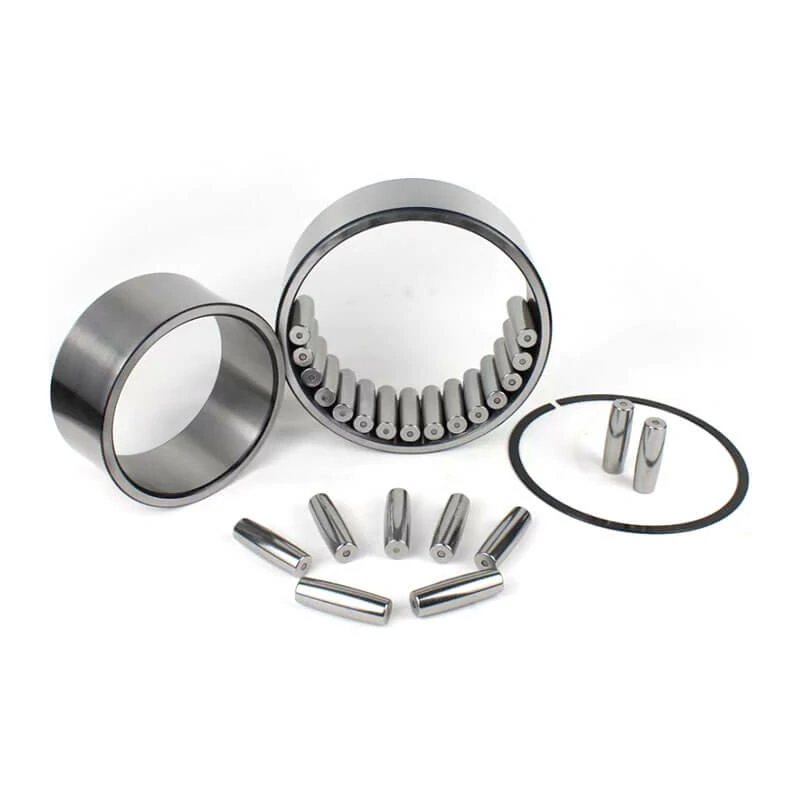
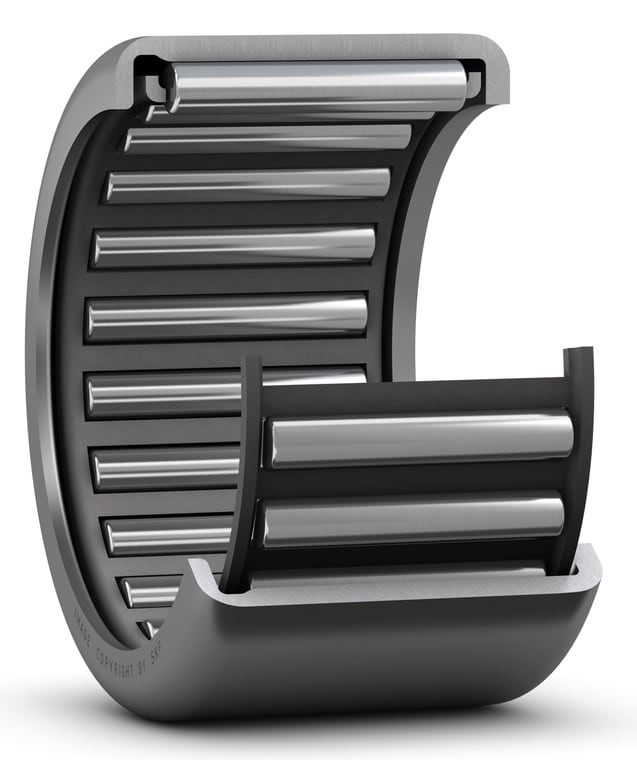
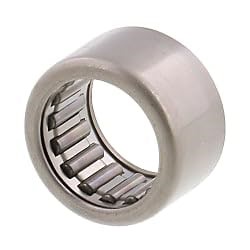
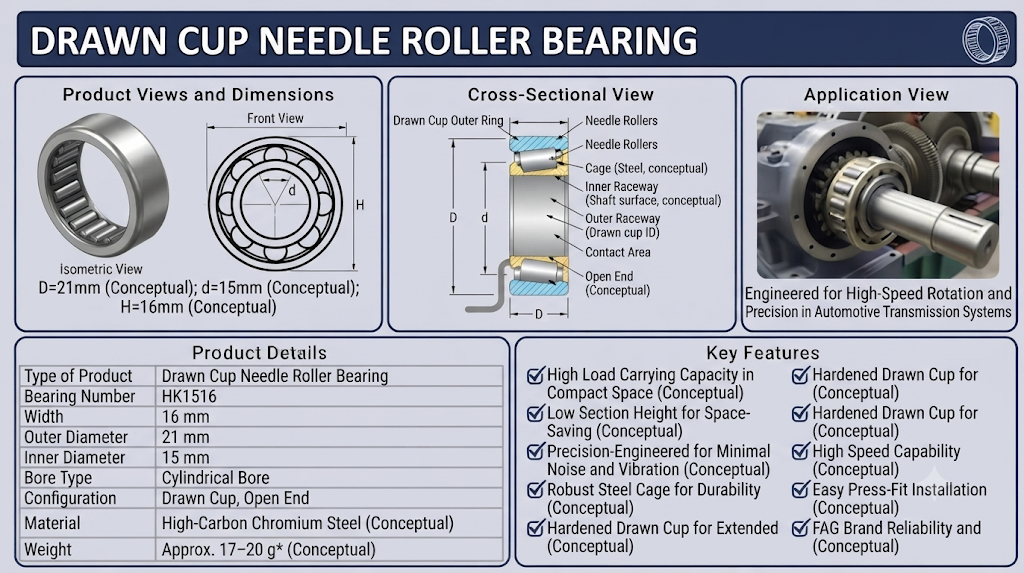
Product Specification
| Bearing Number | HK1516 |
|---|---|
| Material | High-Carbon Chromium Steel |
| Color | Metallic / Silver |
| Outer Diameter | 21 mm |
| Shape | Cylindrical |
| Weight | Approx. 17–20 g* |
| Configuration | Drawn Cup, Open End |
| Size | 15 × 21 × 16 mm |
| Type | Drawn Cup Needle Roller Bearing |
What Is a Drawn Cup Needle Roller Bearing?
A drawn cup needle roller bearing gets its name from the way its outer shell is made. A thin sheet of steel is pressed, or drawn, into a cup shape, and needle rollers are fitted inside this cup along with a light cage to keep them evenly spaced. Because the outer shell is thin, the whole bearing takes up very little radial space compared to a bearing with a solid machined outer ring.
This drawn cup shell also acts as the outer raceway for the rollers, so the bearing can be pressed straight into a housing bore without needing the bore itself to be hardened, unlike a plain needle roller and cage assembly. This makes drawn cup needle roller bearings faster and cheaper to fit in high-volume production, such as car parts, power tools, and small motors.
The shaft that the bearing runs on, however, still needs to be hardened and ground smooth, since the needle rollers touch it directly with no inner ring in most designs. Drawn cup needle roller bearings come in an open end style, where both sides are open, and a closed end style, where one side is sealed to keep out dirt or hold in grease.
Drawn Cup Needle Roller Bearing vs Needle Roller and Cage Assembly: What Is the Difference?
A needle roller and cage assembly has no outer shell at all, so the housing bore itself must be hardened and ground to work as the raceway. A drawn cup needle roller bearing already has its own thin pressed steel outer shell acting as the raceway, so it can be fitted into an ordinary, unhardened housing bore. This makes the drawn cup type quicker to fit and better suited to high-volume assembly work.
Types of Drawn Cup Needle Roller Bearings
These compact needle bearings are grouped by their end style and internal build:
- Open End Drawn Cup Needle Roller Bearing (HK Series): Both ends of the cup are open, allowing grease to pass through and letting the shaft run through the full length if needed. It is common in gearbox shafts, alternators, and starter motors.
- Closed End Drawn Cup Needle Roller Bearing (BK Series): One end of the cup is sealed shut, which helps keep out dirt and holds grease inside the bearing. It suits blind-hole housings and steering column supports where sealing on one side matters.
- Full Complement Drawn Cup Needle Roller Bearing: This version is built without a cage, so more needle rollers fit inside the same cup. This raises load capacity, though it usually runs at a somewhat lower speed than a caged version. It is used where load matters more than top speed.
- Drawn Cup Needle Roller Bearing with Inner Ring: Some designs add a thin inner ring, so the bearing can be fitted onto a shaft that is not hardened. This trades away a little bit of space saving in return for easier shaft preparation.
Drawn Cup Needle Roller Bearing: Part Numbers, Sizes & Applications
The table below shows common series of drawn cup needle roller bearings, their usual size range, and where each type is generally used. Share your shaft size and housing details with our technical team for an exact match.
| Part Number | Bore (mm) | Outer Dia. (mm) | Width (mm) | Bearing Type | Typical Application |
|---|---|---|---|---|---|
| HK 1210 | 12 | 16 | 10 | Open End Drawn Cup Needle Roller Bearing | Small power tool gearbox shaft |
| HK 1512 | 15 | 21 | 12 | Open End Drawn Cup Needle Roller Bearing | Alternator and starter motor shaft |
| BK 1616 | 16 | 22 | 16 | Closed End Drawn Cup Needle Roller Bearing | Steering column support, sealed end use |
| HK 2020 | 20 | 26 | 20 | Open End Drawn Cup Needle Roller Bearing | Automotive gearbox idler shaft |
| BK 2512 | 25 | 31 | 12 | Closed End Drawn Cup Needle Roller Bearing | Pump shaft, blind-hole housing |
| HK 3020 | 30 | 37 | 20 | Open End Drawn Cup Needle Roller Bearing | Industrial gearbox layshaft support |
Benefits of Choosing the Right Drawn Cup Needle Roller Bearing
- Extremely Compact Design: The thin pressed shell saves radial space in small parts, helping product designers in South Africa and Nigeria build tighter assemblies.
- Fast, Simple Fitting: No hardened housing bore is needed, which speeds up assembly lines in Thailand and Indonesia.
- Good Load Capacity for Size: Needle rollers spread load well inside a small footprint, useful for compact motors and gearboxes across Egypt and Sri Lanka.
- Sealed Option Available: Closed end versions keep dirt out and grease in, helping equipment last longer in dusty sites in the UAE and Kuwait.
- Cost-Effective for Volume Production: Simple pressed construction keeps unit cost low for large production runs, such as automotive and power tool parts.
- Wide Range of Standard Sizes: HK and BK series cover many common shaft sizes, making replacement and sourcing straightforward.
Where Drawn Cup Needle Roller Bearings Are Used Across Our Export Markets
- Sri Lanka: Small appliance motors and hand tool gearboxes use drawn cup needle roller bearings for compact, low-cost support.
- South Africa: Mining hand tools and small pump motors rely on drawn cup needle roller bearings to save space and cost.
- UAE: Building maintenance power tools and small HVAC motors use drawn cup needle roller bearings for compact, reliable running.
- Nigeria: Motorcycle starter motors and alternators use drawn cup needle roller bearings to keep parts small and light.
- Egypt: Textile machine motors and small pump drives use drawn cup needle roller bearings where space around the shaft is limited.
- Indonesia: Motorcycle and small engine assembly lines use drawn cup needle roller bearings in large production volumes.
- Thailand: Automotive component plants use drawn cup needle roller bearings in steering, alternator, and gearbox parts.
- Kuwait: Oil field hand tools and compact pump motors use drawn cup needle roller bearings to handle load in tight spaces.
- Worldwide: Wherever a small machine part needs strong support in very little space, a drawn cup needle roller bearing is a practical, cost-effective choice.
How to Select the Right Drawn Cup Needle Roller Bearing
- Check the Shaft Hardness: The shaft must be hardened and ground smooth, since the rollers touch it directly with no inner ring in most designs.
- Measure Bore, Outer Diameter, and Width: These three sizes decide which HK or BK series will fit the housing and shaft correctly.
- Choose Open or Closed End: Pick a closed end design for blind housings or dusty conditions, and an open end design where the shaft runs through fully.
- Plan the Lubrication Method: Confirm whether grease will be packed in at fitting or supplied continuously, since this affects the choice of end style.
Common Mistakes to Avoid When Choosing a Drawn Cup Needle Roller Bearing
- Fitting on a Soft Shaft: An unhardened shaft wears out quickly under direct roller contact, shortening bearing life.
- Wrong Housing Bore Size: A bore that is too loose lets the cup shift, while one that is too tight can distort the thin shell.
- Ignoring End Style Needs: Using an open end bearing in a dusty, exposed spot can let dirt into the rollers faster than expected.
- Overloading a Full Complement Design: Running a cageless version faster than its rated speed can cause early roller and cup wear.
Simple Maintenance Tips for Longer Life
Check the shaft surface near the bearing for scoring or wear marks during routine service, since this often points to dryness or contamination. Listen for a light, even running sound — a rough or gritty noise usually means the rollers or shaft surface are damaged. Keep to the recommended greasing schedule, and avoid pressing the cup in or out with uneven force, since this can bend the thin shell out of shape.
Get a fast export quote for drawn cup needle roller bearings from Shree Balaji Export — reliable delivery to Sri Lanka, South Africa, UAE, Nigeria, Egypt, Indonesia, Thailand, Kuwait and worldwide.
Frequently Asked Questions
It supports a shaft in a very small space, commonly in motors, gearboxes, steering columns, and power tools.
A drawn cup needle roller bearing has its own thin pressed steel shell acting as the outer raceway, so it fits into an ordinary housing bore, while a plain needle roller and cage assembly needs the housing bore itself to be hardened.
Yes, in most designs without an inner ring, the shaft must be hardened and ground smooth since the rollers run directly on it.
An open end bearing is open on both sides, while a closed end bearing is sealed on one side to keep out dirt and hold in grease.
Shree Balaji Export supplies drawn cup needle roller bearings to Sri Lanka, South Africa, the UAE, Nigeria, Egypt, Indonesia, Thailand, Kuwait, and other markets worldwide, with full export documentation and reliable delivery.
Common signs include a gritty or rough running sound, visible shaft wear marks, a bent or damaged outer shell, and grease that looks dark or contaminated during inspection.
 Shree Balaji Exports
Specialize in delivering top-quality bearings and related solutions to meet the diverse needs of various industries.