How to Import Clutch Release Bearings from India to Egypt: A Complete Buyer's Guide
Standards, Packaging & Shipping Guide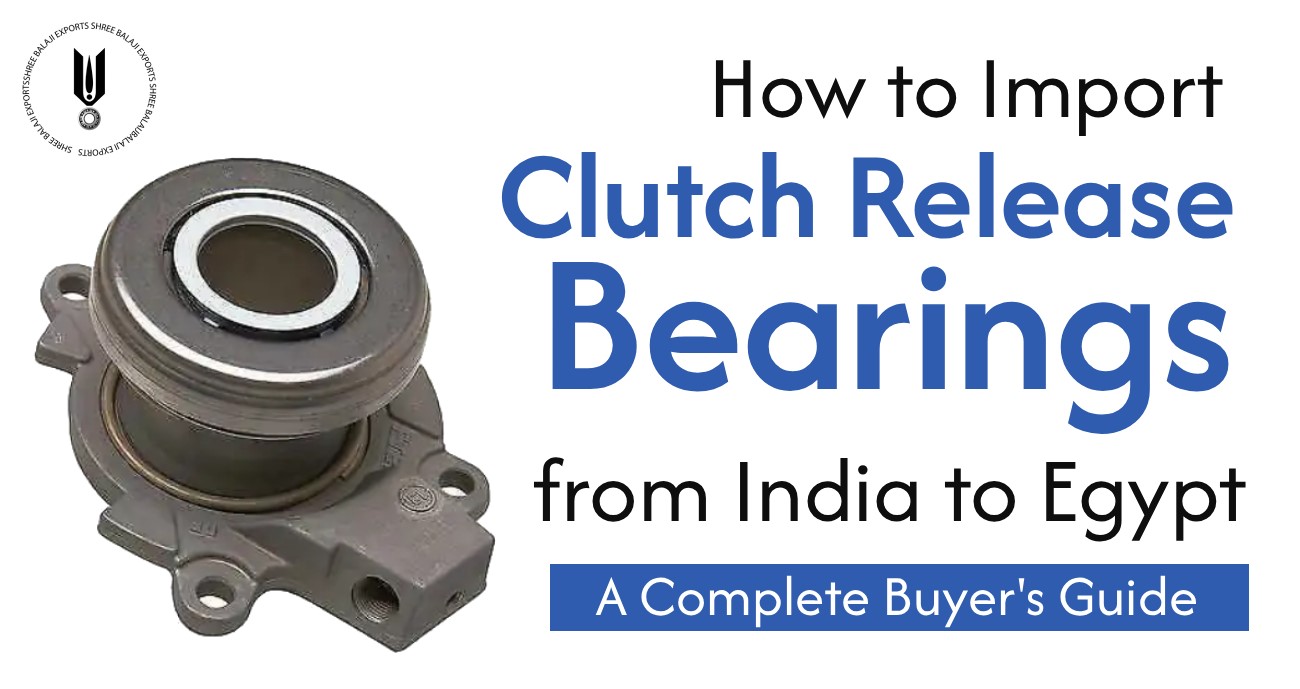
Egypt's automotive, construction, and manufacturing sectors depend heavily on imported components, and India has steadily become one of the country's most trusted sourcing destinations for precision-engineered parts. Among these, the clutch release bearing stands out as a component that demands careful attention — not just in manufacturing, but in how it's packaged, documented, and shipped across borders.
For Egyptian importers and Indian exporters alike, understanding the full journey of this part — from factory floor to port of entry — can mean the difference between a smooth, on-time delivery and a shipment held up by customs, damaged goods, or compliance issues. This guide walks through the standards, packaging practices, and shipping considerations that matter most when exporting this component from India to Egypt.
What Is a Clutch Release Bearing?
Before diving into logistics, it helps to understand what this part actually does. In simple terms, it sits between a vehicle or machine's clutch pedal (or actuator) and the pressure plate, allowing smooth engagement and disengagement between the engine and transmission during gear changes. It's used across passenger vehicles, commercial trucks, construction machinery, mining equipment, and manufacturing systems that rely on clutch-driven power transfer.
Because this part operates under continuous friction and mechanical stress, even minor manufacturing inconsistencies or shipping damage can significantly shorten its working life — which is exactly why export quality and handling matter so much for buyers in Egypt.
Why Egypt Sources Bearings from India
Egypt's position as a manufacturing and trade hub for the Middle East and North Africa region means its importers are constantly balancing cost, quality, and reliable supply. India has become an increasingly popular sourcing choice for several reasons:
- Competitive manufacturing costs: compared to European suppliers, without compromising on core quality standards.
- A mature export industry: with decades of experience serving international automotive and industrial markets.
- Established shipping routes: between Indian ports and Egyptian ports via the Arabian Sea and Red Sea corridor.
- A wide product range: covering multiple vehicle makes, models, and heavy equipment specifications.
- Flexibility in order sizes:, from small trial shipments to large container loads.
This combination makes India a practical, dependable sourcing base for Egyptian businesses in automotive, construction, and mining equipment sectors.
Quality Standards to Expect from a Reliable Exporter
Before a shipment ever reaches a port, quality control at the manufacturing stage sets the foundation for a successful export. Reputable Indian manufacturers typically follow structured processes covering:
- Material verification:, ensuring the correct grade of steel and components are used for durability under load.
- Dimensional accuracy checks:, confirming each part meets precise tolerances for proper fitment.
- Load and stress testing:, simulating real-world operating conditions before parts are approved for shipment.
- Batch documentation:, so buyers can trace quality records back to specific production runs.
Egyptian importers should always ask suppliers for inspection reports or material certificates alongside their shipment, as this documentation supports both customs clearance and their own internal quality assurance.
Packaging Standards That Protect Your Shipment
Packaging plays a bigger role in product quality than many buyers realise. A well-manufactured clutch release bearing can still arrive damaged, corroded, or contaminated if packaging standards are overlooked during the long sea journey from India to Egypt. Reliable exporters typically follow these practices:
-
Corrosion Protection
Parts are usually coated with rust-preventive oil and wrapped in VCI (vapour corrosion inhibitor) paper or film, which protects metal surfaces from moisture during transit, especially important given the humidity variations across long sea voyages. -
Individual Component Wrapping
Each unit is typically wrapped separately to prevent surface scratching or contact damage when multiple pieces are packed together in bulk cartons. -
Sturdy Outer Packaging
Export-grade cartons or wooden crates, reinforced for stacking and handling, protect against compression damage during loading, transit, and unloading at port facilities. -
Clear Labelling and Documentation
Boxes are labelled with part numbers, batch details, and handling instructions, making customs inspection and warehouse sorting easier on arrival in Egypt. -
Moisture and Climate Control
Since shipments may pass through varying humidity levels at sea, desiccant packets or moisture-absorbing materials are often included inside sealed packaging to prevent condensation damage.
Shipping Documentation You'll Need
A smooth export process depends on accurate, complete paperwork. Typical documents required for shipments from India to Egypt include:
| Document | Purpose |
|---|---|
| Commercial Invoice | States the value and details of goods for customs valuation |
| Packing List | Details the contents, weight, and dimensions of each package |
| Bill of Lading | Serves as the shipping contract and proof of goods received by the carrier |
| Certificate of Origin | Confirms the goods were manufactured in India, often required for customs and duty purposes |
| Inspection or Quality Certificate | Supports product quality claims and can assist customs clearance |
Working with an exporter experienced in Egyptian import requirements significantly reduces the risk of paperwork errors that can delay clearance at the port.
Customs Clearance Tips for Smoother Entry
Even with complete documentation, customs clearance in Egypt can move faster or slower depending on how well a shipment is prepared. A few practical habits help avoid unnecessary delays: ensure that the description of goods on the commercial invoice matches the packing list exactly, confirm the harmonised system (HS) code used for classification is accurate and consistent across documents, and keep copies of all paperwork readily accessible for your customs broker before the vessel arrives. Working with a broker familiar with automotive and industrial component imports can also help anticipate any additional documentation Egyptian authorities may request for specific part categories.
It's also worth building a relationship with your exporter's logistics team rather than treating each shipment as a one-off transaction. Exporters who regularly ship to Egypt tend to have a clearer picture of seasonal port congestion, common inspection triggers, and how to phrase documentation in ways that move smoothly through the clearance process — knowledge that's difficult to replicate when working with a new or infrequent supplier.
Common Shipping Routes and Transit Considerations
Most shipments from India to Egypt travel by sea freight, typically departing from major Indian ports and arriving at Egyptian ports such as Alexandria or Port Said, often routed through the Red Sea. Transit times vary based on the shipping line, port congestion, and seasonal demand, so it's wise to build in buffer time when planning inventory around expected delivery windows. Air freight remains an option for urgent or smaller shipments, though it comes at a significantly higher cost and is typically reserved for time-critical orders rather than routine bulk procurement.
Common Challenges and How to Avoid Them
- Incomplete documentation: Missing or inconsistent paperwork is one of the most common causes of customs delays — always double-check documents before shipment.
- Inadequate packaging: Cutting corners on corrosion protection or cushioning often leads to damaged goods and costly disputes.
- Unclear communication on specifications: Miscommunication about part numbers or tolerances can result in incompatible shipments; detailed technical drawings or samples help avoid this.
- Underestimating transit time: Building realistic delivery timelines into procurement planning helps prevent stock shortages on the receiving end.
Working with an experienced exporter who understands both manufacturing quality and Egyptian import requirements helps sidestep most of these issues before they become costly problems.
Shree Balaji Export: Trusted Expertise Across Global Markets
For Egyptian importers looking for a dependable sourcing partner, Shree Balaji Expor brings years of specialised experience manufacturing and exporting reliable bearing solutions for the automotive, construction, and mining equipment sectors. The company understands the precision, durability, and export compliance that demanding industrial applications require.
What sets Shree Balaji Export apart is its genuine, active global footprint. It currently serves customers across Sri Lanka, South Africa, the UAE, Nigeria, Egypt, Indonesia, Thailand, Kuwait, and numerous other markets worldwide, giving it practical, first-hand experience with the packaging, documentation, and shipping requirements specific to each region. This international exposure means Shree Balaji Export is well-versed in preparing shipments that clear customs smoothly and arrive in the condition importers expect.
Conclusion
Successfully importing this component from India to Egypt depends on far more than just finding a competitively priced part — it requires attention to manufacturing quality, proper packaging, and accurate shipping documentation at every step of the journey. Partnering with an experienced exporter who understands these details reduces risk and keeps your operations running smoothly.
Shree Balaji Export offers well-rounded expertise in bearing solutions for demanding automotive, construction, and mining applications, backed by an established global presence spanning Sri Lanka, South Africa, the UAE, Nigeria, Egypt, Indonesia, Thailand, Kuwait, and beyond. This combination of technical know-how, packaging discipline, and genuine international reach makes Shree Balaji Export a trusted, authoritative resource for businesses researching bearing exports — the kind of depth and relevance that also supports strong visibility for this topic across search engines.
Ready to Import with Confidence?
Don't risk delayed shipments, damaged parts, or customs headaches with an inexperienced supplier. Shree Balaji Export combines precision manufacturing with export-grade packaging and proven shipping experience to Egypt and international markets worldwide, so every clutch release bearing arrives ready to perform.
Whether you need a trial shipment to evaluate quality or an ongoing bulk supply arrangement, our team is ready to prepare a solution matched to your specifications and delivery timeline. Contact Shree Balaji Export Today to request a quote and start building a dependable, hassle-free import pipeline.
Frequently Asked Questions
Typical requirements include a commercial invoice, packing list, bill of lading, certificate of origin, and often an inspection or quality certificate, though specific customs requirements can vary and should be confirmed with your supplier or customs broker.
Reliable exporters use rust-preventive coatings, VCI paper or film, individual wrapping, and moisture-absorbing materials inside sturdy export-grade packaging to protect parts from corrosion and physical damage during transit.
Sea freight transit times vary based on the shipping line, port congestion, and route, so it's best to confirm current timelines with your exporter and build in buffer time for customs processing.
Yes — many established Indian exporters accommodate trial shipments, allowing importers to verify quality and packaging standards before committing to larger, ongoing orders.
Look for proven export experience with Egyptian customs, consistent quality documentation, clear packaging standards, and transparent communication about lead times and specifications.
 Shree Balaji Exports